
Science exhibitions
Project for science exhibition: ideas by class and how exhibitions work
Short answer
A project for a science exhibition can be an investigation with your own readings, a working model, or a device that solves a problem, shown with a chart, a logbook and a talk. Most begin at the school exhibition; the strongest reach regional, state or national rounds. Gurukul Technicals Institute lists models and kits for class 1 to 12.
- Where it starts
- Your school's own exhibition
- CBSE Science Exhibition
- Classes 6 to 8 and 9 to 11
- An entry has
- Exhibit, chart, logbook and a talk
- Projects listed
- Class 1 to 12, by subject
- How to buy
- Amazon, Flipkart or WhatsApp
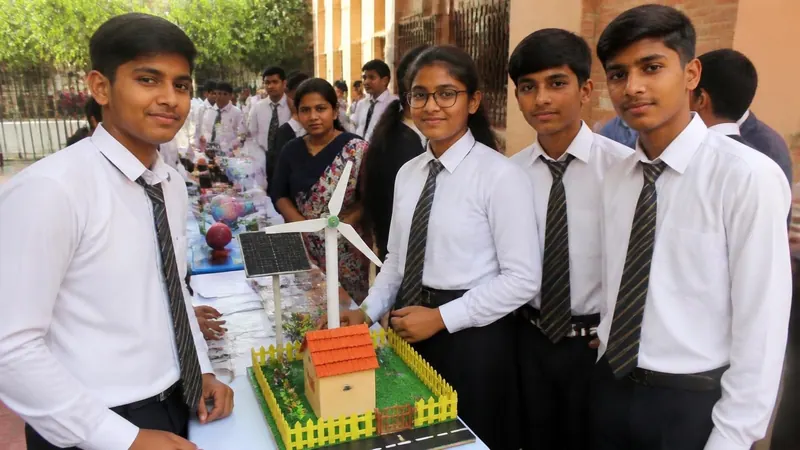
What counts as a project for a science exhibition?
An exhibition entry is more than a model on a table. It is a question or a problem, the science that answers it, and something visitors can watch working.
CBSE names three kinds of entry for its own exhibition, and they suit a school exhibition too: a study based on an investigation, a model that applies a principle of science and technology, and a new solution or indigenous design for a real problem. Each needs something different on the table.
| Kind of project | What it is | An example | What to show on the table |
|---|---|---|---|
| Investigation | A question answered by measuring: change one thing, keep the rest the same, record what happens | Do seedlings grow taller under red, blue or white light? | The setup, a table of readings and a graph |
| Working model of a principle | A model that shows a law of science at work | An electromagnet that holds pins only while current flows | The model running, with a labelled diagram |
| Solution to a problem | A device that fixes a problem you have noticed | A clay pot cooler that keeps vegetables fresh without electricity | The problem, the device and your test results |
- Working model
- A model with a part that moves, lights up or measures when switched on. A static model shows a structure only; the guide to choosing a working model compares the two.
- Logbook
- A dated notebook of what you tried, measured and changed while making the project.
Model or project?
On this page, the model is the object and the project is the whole entry, explanation included. What makes the object work well on the day is covered in best model for science exhibition.
Which science exhibition project suits your class?
What a teacher or judge expects grows with your class: one clear idea in primary school, a principle you can demonstrate in the middle classes, and measurements with reasons from class 9 onward.
| Class | What fits at this stage | Ideas to start from |
|---|---|---|
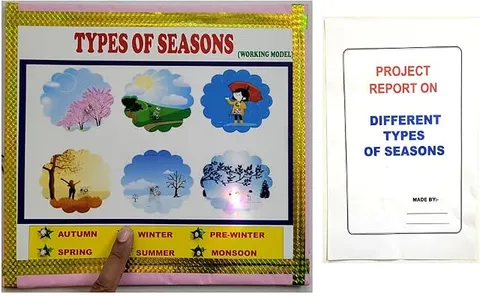
| Class 1 to 5 | One idea you can show and name | Parts of a plant, a butterfly's life cycle, the seasons, magnets |
| Class 6 to 8 | A principle you can demonstrate in your own words | Conductors and insulators, an electromagnet, the lungs, a water filter |
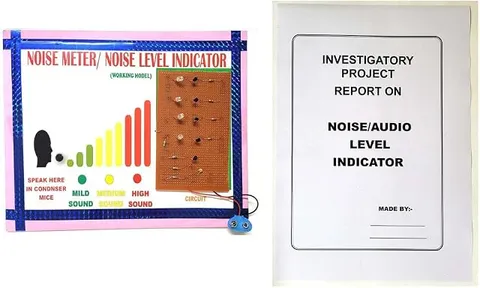
| Class 9 and 10 | A working model with a test or measurement | A noise level indicator, a cell's voltage as it is used, water quality, coin-toss probability |
| Class 11 | An investigation or working solution, with readings | Road noise through the day, hot water cooling in different cups, a fridge door alarm |
| Class 12 | Often the investigatory project | A project from this year's syllabus, with your own readings |
Which exhibitions each class can enter is explained further down; class 12 cannot enter CBSE's own exhibition. The class 12 physics practical has an investigatory project of its own; choosing one chapter by chapter is covered on physics project for class 12.
Class 1 to 5: one idea, shown clearly
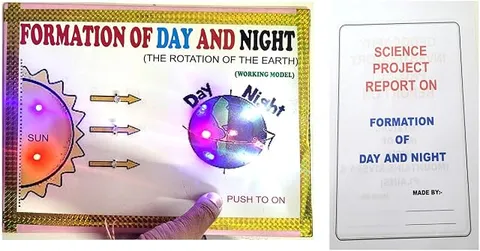
Young children do well with a model that answers one question they can say aloud, such as "What does a caterpillar turn into?" Let the child press the button and name each part, while an adult handles the battery and any cutting.
First projects for class 1 to 5
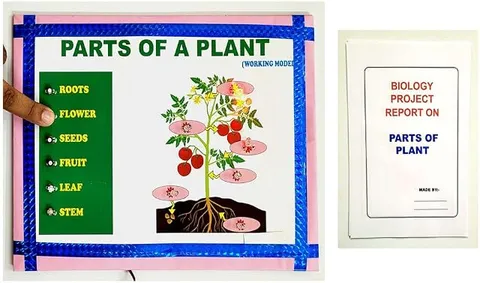
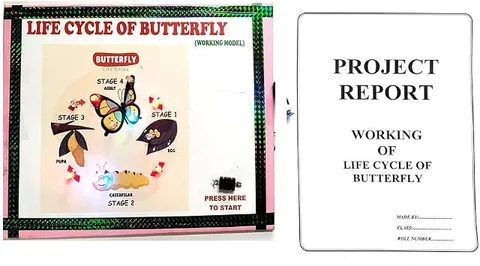
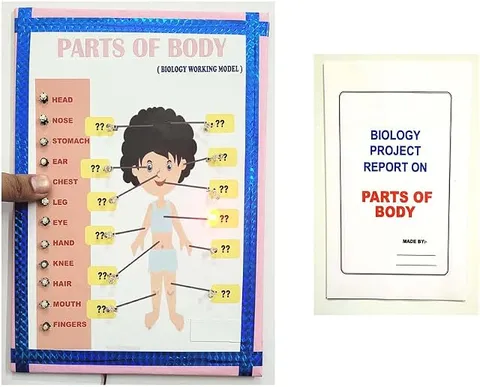
Class 6 to 8: a principle in your own words
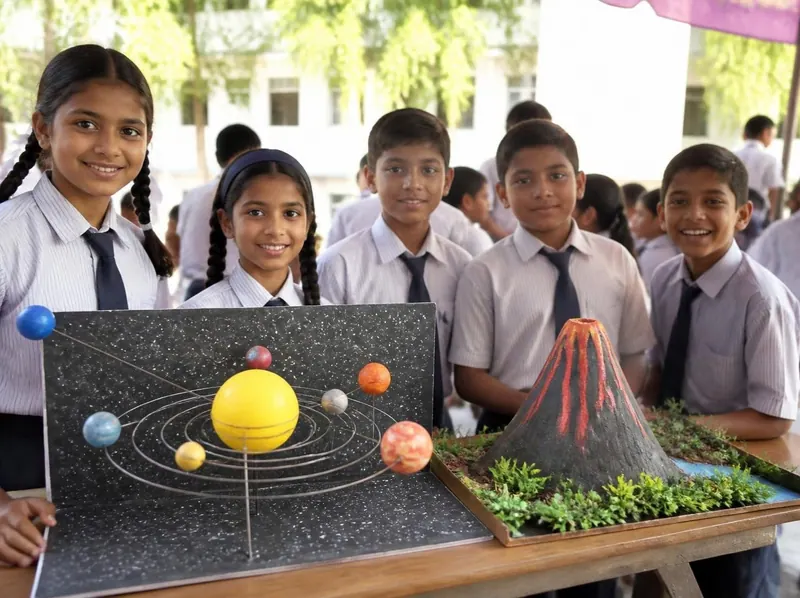
Take a principle from a chapter you are studying and show it working: current through a circuit, an electromagnet lifting pins, air moving in and out of the lungs. The subject groups below have models for each.
Class 9 to 12: projects with readings to take
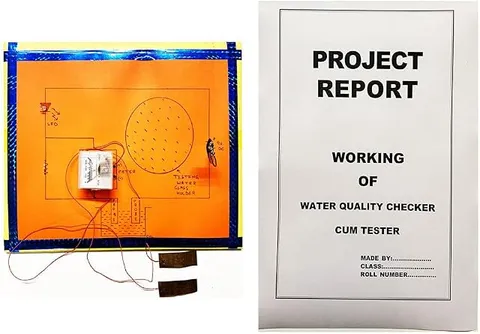
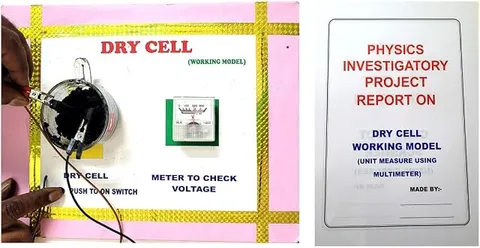
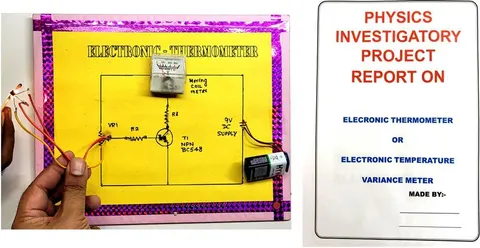
From class 9, readings of your own make a project much stronger. A sensor or meter turns a model into readings: how many of the noise indicator's lights come on at different distances from a road, the dry cell model's voltage on a multimeter beside a fresh torch cell and a used one, or how strongly the water tester responds as salt is stirred in. Add a multimeter where a board has no meter.
For class 9 to 12: sensors, meters and senior biology
Cells, roads and hot water
Never cut open or burn a used cell, and hand old cells in for safe disposal. Carry the dry cell model's glass jar upright, and never touch the black paste inside it.
Take roadside readings from the footpath, with an adult.
For a cooling investigation, an adult pours the hot water into a cup that cannot tip; take those readings at home or in the lab.
The project idea finder lists ideas for class 1 to 5, 6 to 8, 9 and 10 and 11 and 12, and there are free ebooks of projects for class 1 to 5, class 6 to 8 and class 9 and 10.
What project ideas work for each subject?
Exhibitions are open to every branch of science, and usually to maths. Pick the subject you enjoy, then a chapter, then one question inside that chapter.

| Subject | Class 1 to 5 | Class 6 to 8 | Class 9 to 12 |
|---|---|---|---|
| Physics | A magnet fishing game | An electromagnet: more turns, more pins | A pendulum's swing time at three lengths |
| Chemistry | What dissolves in water | Turmeric paper on soap and lemon juice | Nails rusting in dry, wet and salty jars |
| Biology | Seeds with and without water | A bell jar lung with balloons | Stomata on both sides of a leaf |
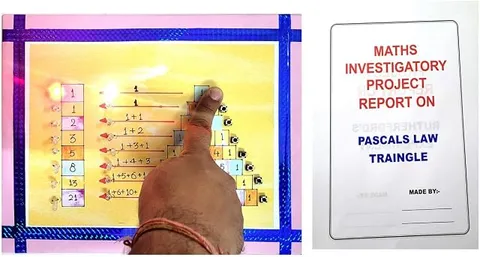
| Maths | Shapes around the classroom | Triangle corners that make 180 degrees | Fibonacci spirals in a sunflower head |
| Earth and space | Day and night with a torch | Moon phases with a lamp and a ball | A pendulum seismograph with a pen |
| Environment | Litter sorted three ways | A homemade rain gauge read daily | Noise at the school gate, hour by hour |
| Electronics | A torch circuit with a switch | A buzzer that sounds when a door opens | A night lamp switched by an LDR |
| Computing | Directions that walk a friend across a grid | A traffic light flowchart, then a block program | A password strength checker |
Physics and electricity
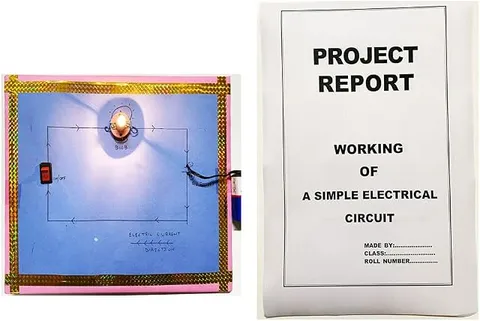
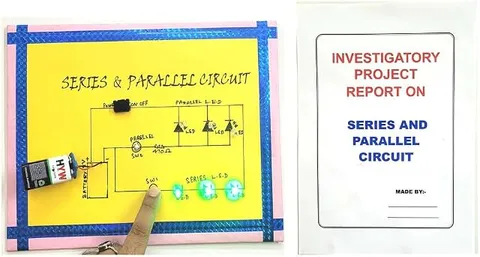
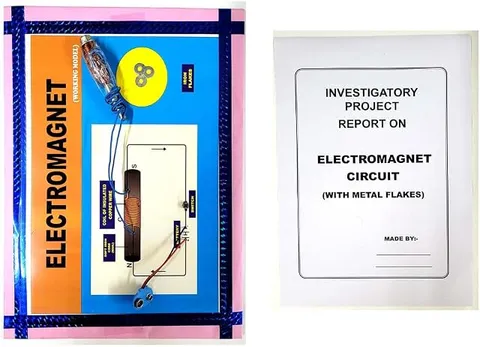
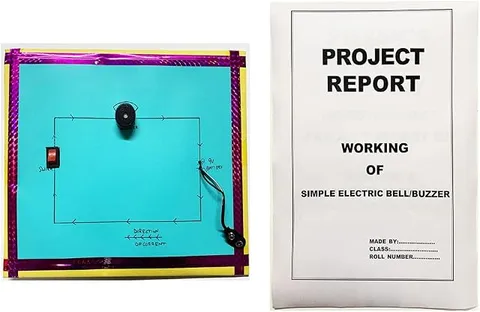
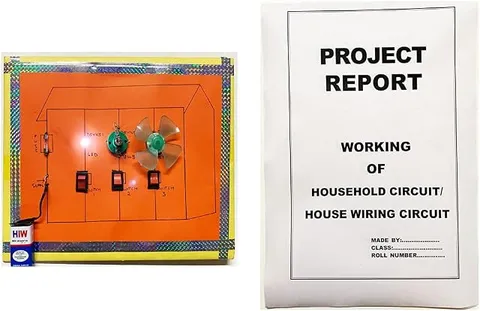
Physics gives the most working models, because a circuit, a magnet or a beam of light does something visible. Ask what changes when you change one thing: a second bulb added in series dims both, because the total resistance rises and the current falls, and more turns of wire make an electromagnet stronger for the same current.
Physics and electricity, class 6 to 9
Batteries and circuits
Run school models on cells or a 9 V battery; anything that plugs into the wall needs a teacher's check and an adult to plug it in. If a wire or battery gets warm, disconnect it and look for bare wires touching. Never mix old and new cells, and keep button cells and small magnets from young children.
Energy, environment, earth and space
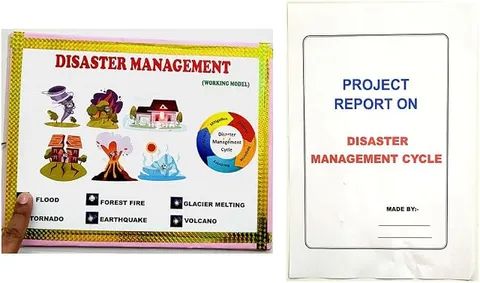
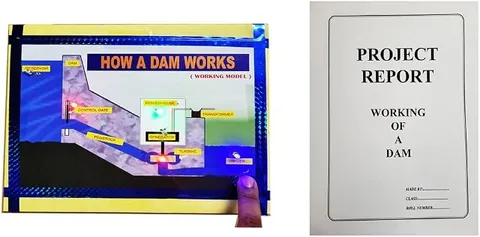
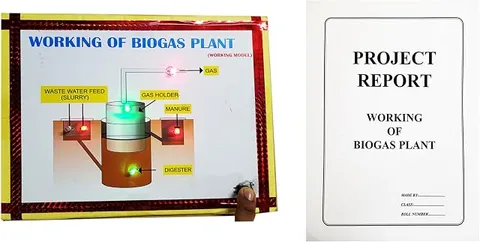
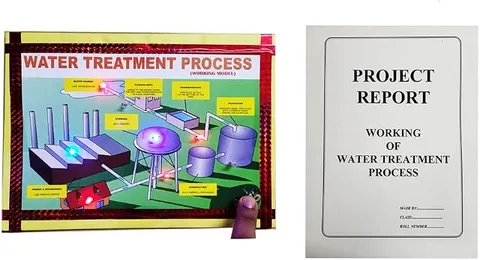
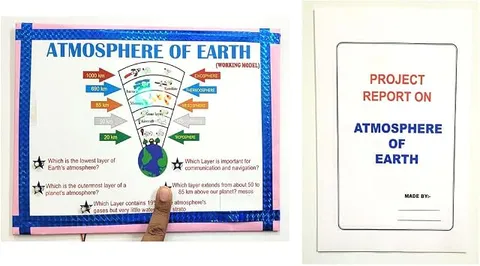
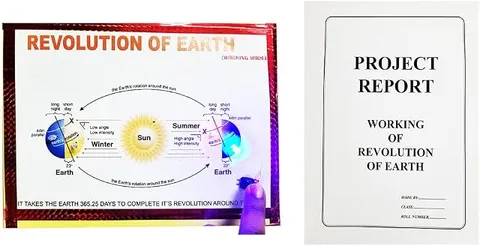
These topics suit the green energy, disaster and rural sub-themes. Several of these boards are lit charts that name the parts, so the project is the working piece you set beside one. The dam board only lights the water's path: add a turbine of your own (plastic spoons glued round a bottle cap on a toy motor's shaft) and read its output on a multimeter as water pours on, over a tray, keeping the motor and meter dry. Beside the disaster board (keep it dry), pour water down two sloping trays of soil, one with grass and one bare, and compare how muddy the runoff is: roots hold soil in place. The free Renewable Energy Models ebook covers water power.
Energy, environment, earth and space
Biology
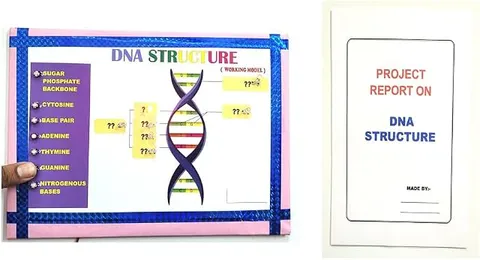
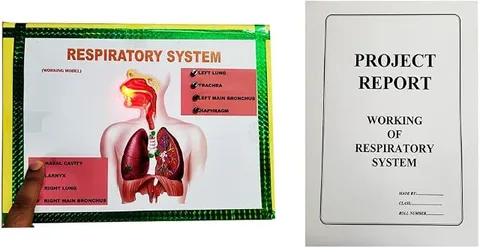
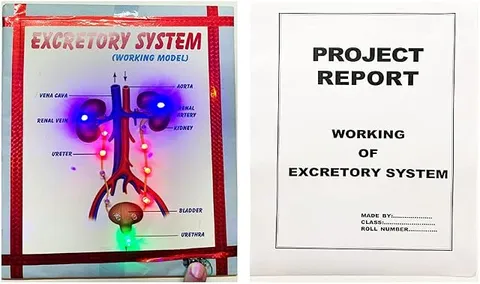
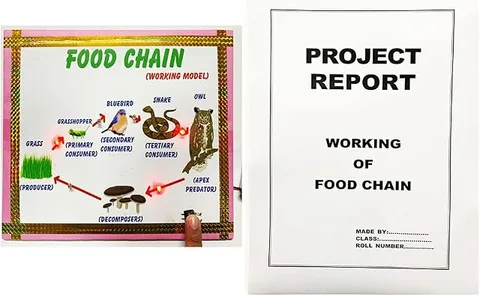
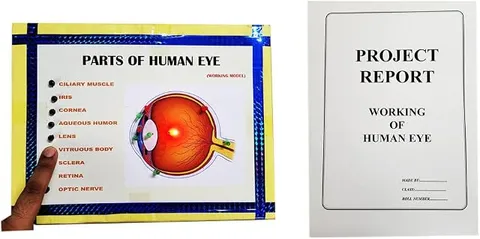
Biology models usually show a structure, such as the respiratory system, so they need a question to become a project: a table of classmates' breathing rates before and after a minute of skipping turns a respiratory system model into an investigation. The free Biology Models Guide explains each system.
Biology models, class 6 to 10

Chemistry
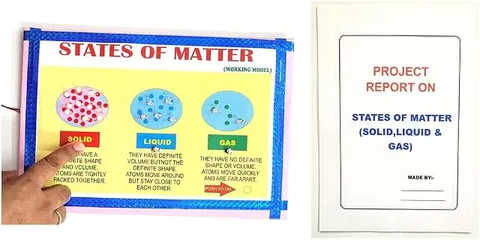
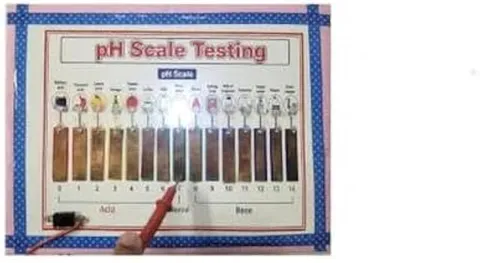
Chemistry is safest as a test you can repeat in front of visitors: whether a solution conducts electricity, or which colour an indicator turns. Pure water conducts very poorly and dissolved salts let it carry a current, the idea behind a conductivity water tester; turmeric turns reddish in soap solution and stays yellow in lemon juice.
Chemistry models
Chemicals at the exhibition
Use kitchen-safe materials such as vinegar, baking soda, salt, lemon juice and turmeric (vinegar and lemon juice are weak acids); keep laboratory acids and alkalis, bleach and anything hot off the table. Wear goggles when mixing, label every bottle, and never let a visitor taste or smell a sample. See Safe Chemistry Projects for School.
Maths
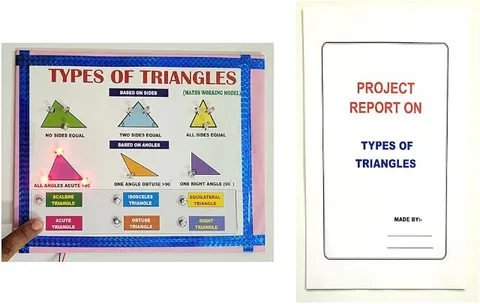
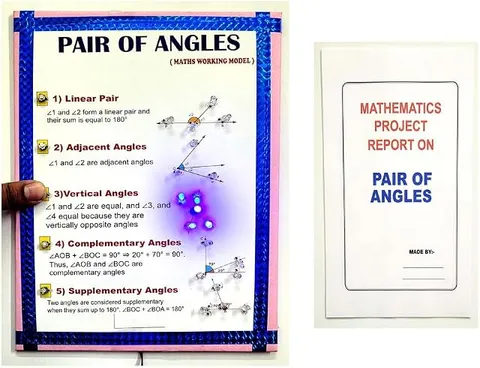
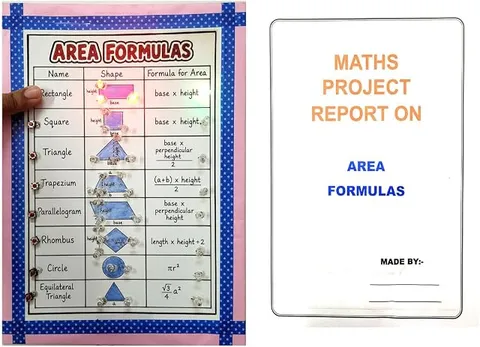
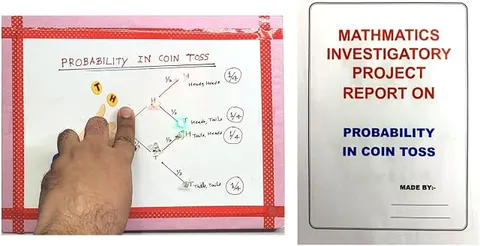
A maths exhibit works when visitors can do something: press the button beside "obtuse-angled" and that triangle lights up, or toss two coins and compare the results with the prediction. The chance of two heads is one in four, and a class tossing ten times each can see how close real results come. More models are in Maths Working Models and Activities.
How do science exhibitions work, from school level upward?
Almost every exhibition begins inside a school. From there an entry can travel further along one of a few routes, depending on your board, your class and the kind of project.

| Route | Who runs it | Who can take part | How an entry gets there |
|---|---|---|---|
| Your school's exhibition | Your school | Usually every class | Through your teacher |
| CBSE Science Exhibition | CBSE: regional, then national rounds | Category I (class 6 to 8) and Category II (class 9 to 11); not class 12 | The school registers up to two teams of at most two students and a mentor teacher; exhibits in eco-friendly materials |
| RBVP (NCERT) | NCERT, after state feeder exhibitions | All schools at state level; national entries from class 9 to 12 | School, block, district and state exhibitions, or a school body's own exhibition |
| INSPIRE-MANAK (DST) | DST with the National Innovation Foundation | Individual students of class 6 to 12 (class 11 and 12: science stream) | School nomination, then district, state and national rounds |
The CBSE Science Exhibition
CBSE holds its exhibition first at regional and then at national level, and recent circulars have placed the rounds between October and January. It is open to Category I and Category II only, so class 12 is not eligible. The school registers its teams, at most two, so ask your science teacher early in the session.
Each session has a theme and sub-themes (the current theme is in the questions below). The current session has seven, and NCERT uses the same seven for the state exhibitions leading to the next RBVP. NCERT calls them suggestive, so another area of science and technology is allowed there.
| Sub-theme | An exhibit idea to start from |
|---|---|
| Artificial Intelligence (AI) for Better Life | A program trained on your own photos to sort ripe and unripe tomatoes |
| Green Energy & Environmental Conservation | A solar panel's output as you tilt it away from the sun |
| Mathematical Modelling and Computational Thinking | A spreadsheet model of a cold spreading through a class |
| Health, Hygiene and Sanitation | A touch-free tap, tested for how reliably it switches |
| Indigenous Agricultural Practices | How long soil stays moist under a mulch of dry leaves |
| Science for Rural Transformation | A sand and charcoal filter for muddy water (it clears particles, not germs) |
| Disaster Management | A float switch that sounds a buzzer as flood water rises |
Rashtriya Bal Vaigyanik Pradarshani (RBVP)
NCERT holds the Rashtriya Bal Vaigyanik Pradarshani (RBVP), its national exhibition for children, once called JNNSMEE. It ends a chain of school, block, district and state exhibitions: each state may send up to three entries per sub-theme by students of class 9 to 12, which NCERT shortlists from write-ups and a video of about five minutes. Kendriya Vidyalaya Sangathan, Navodaya Vidyalaya Samiti and some other bodies send entries from their own exhibitions, and CBSE forwards the names of its national winners for consideration.
INSPIRE-MANAK
INSPIRE-MANAK, run by the Department of Science and Technology (DST) with the National Innovation Foundation, is not entered directly. Your school holds its own idea competition and nominates up to five original ideas a year on DST's E-MIAS portal, each from one student, at most two of them from class 11 or 12. Shortlisted ideas go on to district, state and national exhibitions.
MANAK wants inventions, not demonstrations
DST calls INSPIRE-MANAK an innovation competition, not a science project competition, so a model that only demonstrates a textbook concept should not be nominated, and ideas taken from textbooks, DIY books or websites should not be nominated either.
What does a complete exhibition entry include?
Judges spend only a few minutes at each table, so everything they need to understand your project should be there, in a form they can take in quickly.
| Part | What it contains | Check before the day |
|---|---|---|
| The exhibit | Your model, setup or device, every part labelled | It works twenty times in a row on the power the venue has |
| The display chart | Title, question, a labelled diagram, the principle, your results and a use | Large lettering, your own words, results as a table or graph |
| The logbook | Dated notes of what you tried, what failed, what you changed and every reading | Kept while you worked, not written up the night before |
| The report | Aim, materials, method, observations, result, conclusion and sources | In a folder on the table |
| The explanation | A short talk: problem, principle, demonstration, result, use | Every team member can give it alone |
The free ebooks Writing a Science Project File and Your Science Exhibition Guide cover the report and the display. What to write in the logbook, entry by entry, is on best project for science exhibition.
How do you plan a project for a science exhibition, step by step?
Plan backwards from the exhibition date. These steps run from the day the notice comes out to the morning you set up; the guide to choosing a working model adds a week-by-week plan for the build itself.

Read the exhibition notice
Note the category, theme, table size, mains power, team size and last date, and ask your science teacher about anything missing.
Form the team and share the work
Agree who builds, who records and who explains, within the team size the notice sets.
Choose a subject and one question
Start from a chapter you are studying and write the question or problem in one sentence; if it will not fit, the idea is still too wide.
Decide how you will get the exhibit
Build from parts, start from a DIY kit, or add your own investigation to a ready-made model, once you know what the exhibition allows.
Build, test and record
Get the working part going first, then run it again and again, logging every reading and change.
Make the chart and the report
Use your recorded results, in your own words, with one clear diagram.
Rehearse the explanation
Practise for someone new to the topic and take their questions, until each of you can explain the whole project.
Pack the night before
Go through the packing list below and fit fresh batteries.
Order early if you are buying
Order a model or kit once the topic is fixed. Each listing shows, before you pay, when it can reach your PIN code; an early arrival leaves time for testing and readings of your own.
Can you use a ready-made model at a science exhibition?
It depends on the exhibition, and the rules grow stricter as the level rises. A ready-made model makes a good reference; a competition wants work that is visibly your own.
| Exhibition | What the rules say | What to do |
|---|---|---|
| School exhibition | Set by your school; some allow a bought model for junior classes | Ask the organising teacher, and say honestly what you made |
| CBSE Science Exhibition | Originality and innovativeness are among the criteria judged | Make your own exhibit; a kit can supply the parts |
| State exhibitions and RBVP | NCERT says procuring ready-made exhibits or models must be ruled out, and working models encouraged | Build it yourselves; a bought model is only for learning from |
| INSPIRE-MANAK | Ideas from textbooks, DIY books, websites or other competitions should not be nominated | Start from a problem you have seen and an idea of your own |
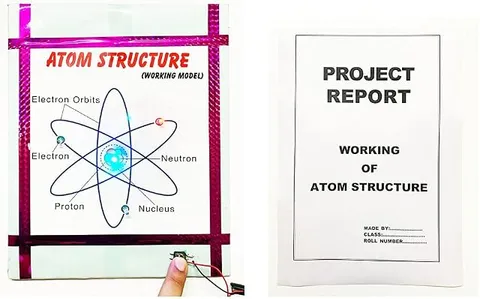
Where a bought model is allowed, it still has to become your project: learn every part from its product page, and from its printed report if the listing includes one, then add readings, a test in new conditions or an improvement. Class 12 investigatory project physics shows how to turn a model into an investigation.
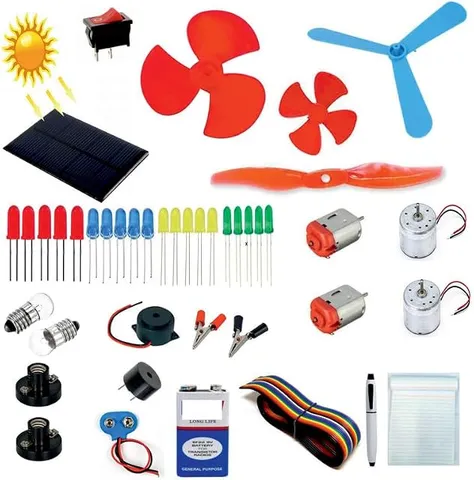
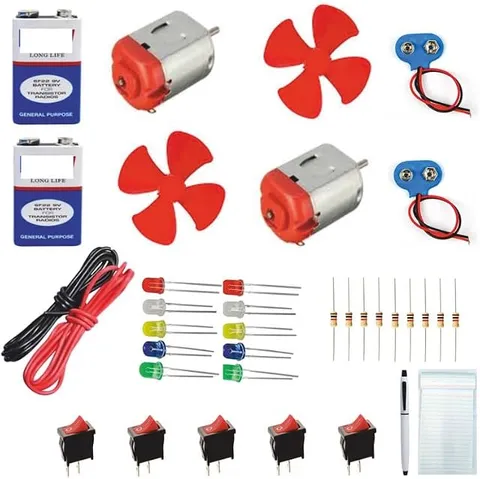
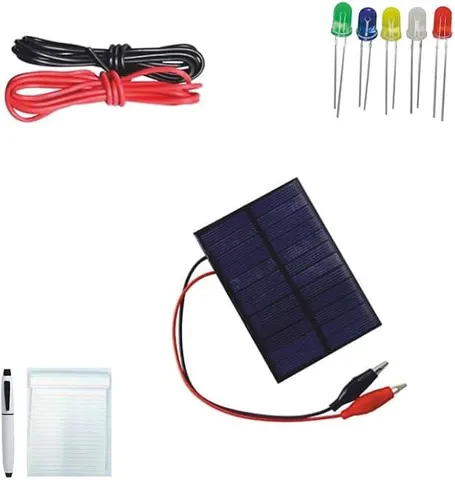
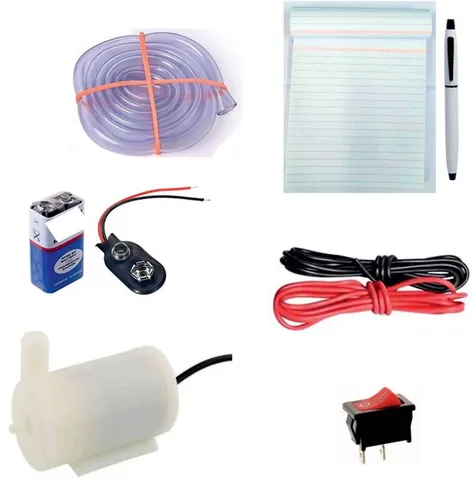
Building your own is easier than it sounds: a DIY kit gives every part with instructions, the illustrated project guides go step by step, and the best out of waste guide uses bottles and cardboard.
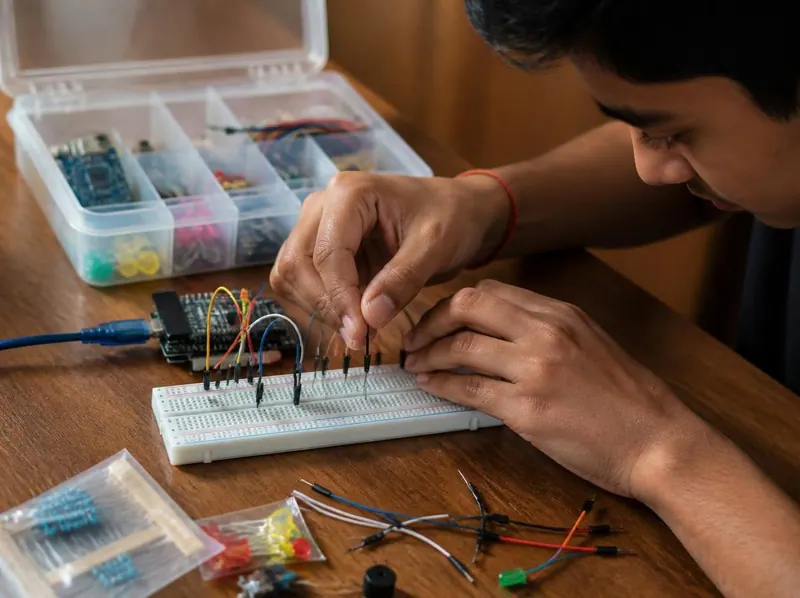
Parts for building your own exhibit
What happens on exhibition day, and what should you pack?
On the day you are your exhibit's guide. Arrive early, set up calmly, and share the jobs so that someone is always ready to explain.
Judges usually go round table by table, watch the exhibit work and ask questions. CBSE's criteria and weights are in the guide to choosing a working model; whatever the list, a team that answers "how do you know?" from its logbook is ready.
| Role | What they do | In a team of two |
|---|---|---|
| Presenter | Gives the short talk: problem, principle, demonstration, result, use | Take turns, so neither voice tires |
| Demonstrator | Runs the exhibit, points to each part, resets it after every visitor | Whoever is not talking |
| Recorder | Holds the logbook and report, answers questions on readings and method | Whoever kept the logbook |
| Checker | Looks over batteries, loose wires and the chart between visitors | Both, in quiet moments |
Exhibition day packing list
- The exhibit in a padded box, so nothing bends or snaps
- Spare batteries of every size it uses, and a spare battery snap
- The chart in a folder, with tape or pins
- The logbook and the printed report
- A screwdriver, scissors, tape, glue and spare wires
- A tablecloth and name cards
- An extension board only if the notice promises mains power, with an adult to plug it in
- Water and a snack: exhibitions run long
Safety at the table
Keep a mains-powered exhibit off the table unless a teacher has checked it and an adult plugs it in. Tape loose wires down, point any laser at the table and never at faces, leave glue guns and soldering irons at home, and bring a candle or other flame only if the organisers allow it, with an adult beside you.
Your dates, the notice check, the chart and the packing list are on a printable planner; the printable checklists page has more sheets like it.
Where can you get a project for a science exhibition?
Buy a model or kit from the store, ask about a topic that is not listed, or start from the free help below.
Gurukul Technicals Institute's store lists working models and kits by class and subject, each with a page explaining how it works. The card links to its listing on Amazon or Flipkart, which shows the price and when it can reach you, or you can order or ask on WhatsApp. Some listings include a printed report and say so.
Looking for a topic that is not listed? Message the store on WhatsApp with the topic, your class and your exhibition date, and the reply says whether it can be made and when it can be sent.
Free help for your exhibition project
- Project idea finderMore than a thousand ideas by class and subject.
- Your Science Exhibition GuideA free ebook on choosing, building and presenting a project.
- Viva Questions for Science ProjectsSample questions on popular projects, with answers to practise.
- Preparing for a school science exhibitionFor parents: a plan, a talk outline and a checklist.
- Science fair skillsOutline of a proposed course on planning, testing and presenting; ask whether it runs.
Questions about science exhibition projects
Short answers to what students, parents and teachers ask about projects most often. Tap a question to open its answer.
What is the difference between the CBSE Science Exhibition and RBVP?
CBSE runs its own exhibition for students of class 6 to 11 in its schools, at regional and then national level. RBVP is NCERT's national exhibition for children, reached through state exhibitions and the separate exhibitions of bodies such as Kendriya Vidyalaya Sangathan, with national entries from class 9 to 12. CBSE forwards its national winners' names to RBVP for consideration.
Can a class 12 student enter the CBSE Science Exhibition?
No. CBSE's exhibition is open to Category I (class 6 to 8) and Category II (class 9 to 11) only. A class 12 student can still show a project at school, and through INSPIRE-MANAK if the school nominates the idea (science stream only). Ask your teacher whether your school's entries can reach the state exhibitions leading to NCERT's RBVP, since independent CBSE schools and some school systems have channels of their own.
What is the theme of the CBSE Science Exhibition?
CBSE sets a theme and sub-themes for each session by circular. The current theme is "STEM for Science, Technology, and Innovation for a Sustainable and Vikshit Bharat" (CBSE's spelling), with seven sub-themes: AI for better life; green energy and environmental conservation; mathematical modelling and computational thinking; health, hygiene and sanitation; indigenous agricultural practices; science for rural transformation; and disaster management.
How does a project get selected for RBVP?
Through the exhibitions that feed it: school, block or district, then state, from where up to three entries per sub-theme by students of class 9 to 12 may go to NCERT, which shortlists from write-ups and a short video. Bodies such as Kendriya Vidyalaya Sangathan send entries from their own exhibitions, and CBSE forwards its national winners' names.
What is the new name of JNNSMEE?
The Jawaharlal Nehru National Science, Mathematics and Environment Exhibition (JNNSMEE) is now the Rashtriya Bal Vaigyanik Pradarshani (RBVP), a name its advisory committee gave it in the light of the National Education Policy.
Can I buy a working model for a science exhibition?
Yes, the store lists them by class and subject. Whether you may show one depends on the exhibition: some school exhibitions allow it, while NCERT's guidelines rule ready-made exhibits out. Where it is allowed, add readings or an improvement of your own.
How many students can be in a science exhibition team?
At CBSE's exhibition, at most two students of the same category with one mentor science teacher, and at most two teams per school. INSPIRE-MANAK takes individual students, not groups. A school exhibition sets its own rule.
What should be written on a science exhibition chart?
A title that says what the project does, the question in one sentence, one labelled diagram, the principle in a few lines of your own, your results as a small table or graph, where the idea is used, and your names and class.
How early should I start a project for a science exhibition?
As soon as the notice comes out. Leave the most time for testing and the logbook: a model that first works the night before has nothing to show but itself. If you are buying, order once the topic is fixed.
Delhi head office
Ask about a project for your exhibition
Send your class, the subject or topic and the exhibition date to the Delhi head office on WhatsApp. Ask which listed model or kit fits, whether a printed report comes with it, or whether a topic that is not listed can be made in time.