- Physics
- Ready-made model
- Class 1 to 9
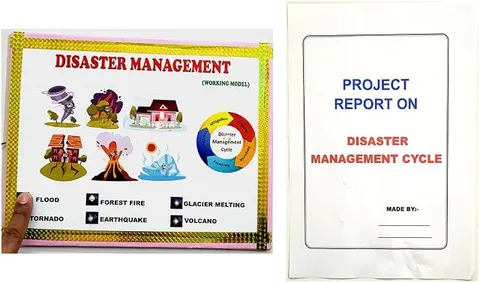
Disaster Management Working Model Project and Science Teaching Aid Educational Electronic Hobby Kit
Code B0DTY55KHX
- Paid for and delivered by Amazon. The current price and the delivery date for your PIN code are shown there.
- Sold by Gurukul Technicals Institute, Delhi.
- Need a different topic, a custom version or a school order? Ask on WhatsApp.
In this project guide
Ready-made model
About this model
This working model is about disaster management: how communities prepare for, respond to and recover from events such as floods, earthquakes, cyclones and fires. It helps a student explain both the science behind a disaster and the safety steps that save lives, which makes it a strong exhibition and awareness topic.
How it works
The science behind it
The idea the model demonstrates, in words you can use in your report and when you explain it.
A hazard is a possible source of harm, such as an earthquake zone or a flood-prone river; it becomes a disaster when it causes loss of life and property beyond a community's ability to cope. Disasters can be natural, like earthquakes, floods, cyclones, landslides and droughts, or man-made, like fires and industrial accidents such as the Bhopal gas tragedy of 1984. Earthquakes happen when stress built up between moving tectonic plates is suddenly released as seismic waves from a point underground called the focus; the point directly above it on the surface is the epicentre. Cyclones form over warm ocean water. Disaster management works as a cycle: mitigation (reducing risk, for example with earthquake-resistant buildings), preparedness (warnings and drills), response (rescue and relief) and recovery (rebuilding). Early cyclone warnings and timely evacuation in Odisha have greatly reduced deaths in recent cyclones.
Make it yourself
Make a disaster management model with a flood alarm yourself
Build your own version from scratch, or use the steps to understand how the ready-made model is put together before you present it.
What you need 9
Step by step 9 steps
Divide the board into zones for earthquake, flood and cyclone, with a side panel for an emergency kit and helpline numbers.
- Build the shake table
Fix the motor with its off-centre weight under the platform, which rests on the erasers so it can wobble.
Make two buildings of the same size from ice-cream sticks, one with diagonal cross-braces and a wider base, and fix both on the platform.
Switch on the motor to shake the platform and show which building stands up better.
Place the river tray in the flood zone and fix the two probe wires at a danger mark on its inside wall, not touching each other.
- Wire the alarm
Battery positive to one probe, the other probe through the 1 kΩ resistor to the transistor's base, the buzzer from battery positive to the collector, and the emitter to negative.
- Pour water into the tray
When it reaches the probes, the buzzer sounds as an early warning.
Add houses on stilts, an embankment, a cyclone shelter on high ground and arrows marking an evacuation route.
Write do's and don'ts for before, during and after each disaster on cards beside its zone.
Read this first
Safety first
Go through these points before you build or switch anything on. Younger students should do this with an adult.
- Only the bare probe tips should touch the water; keep the battery, transistor and buzzer dry and above the tray.
- Fix the off-centre weight firmly and keep fingers away while it spins.
- Show fire with red cellophane or LEDs only, never a real flame.
- Ask an adult to use the cutter and the glue gun.
Troubleshooting
If something does not work
The usual problems with this model and how to fix them. Open a problem to see the fix.
The buzzer sounds all the time
The probes are touching, or water on the tray wall is bridging them. Separate them and dry the tray.
The buzzer stays silent when water reaches the probes
Check the transistor's pins and the buzzer's polarity, and make sure the probe ends are bare metal, not insulated.
The shake table hardly moves
Use a heavier off-centre weight or fix it farther from the shaft, and fit fresh cells.
Both buildings fall at once
Glue their bases firmly to the platform and make the difference in bracing clearer.
Exhibition day
How to present it
A running order for the exhibition table or the practical, step by step.
Explain the four stages of the disaster management cycle with the help of the model, giving one example action for each stage.
Demonstrate a safety drill such as Drop, Cover and Hold On for earthquakes, so the judges see practical knowledge.
Display emergency helpline numbers, including 112 for all emergencies and 101 for fire.
Mention national bodies such as the NDMA, which plans for disasters, and the NDRF, which carries out rescue work.
Practice
Viva questions
Practice questions on this model, with short answers. Try each one aloud before you open the answer.
What is the difference between a hazard and a disaster?
A hazard is a possible danger, such as a flood-prone river; it becomes a disaster when it actually causes widespread damage that the community cannot handle on its own.
What are the stages of the disaster management cycle?
Mitigation, preparedness, response and recovery.
What should you do if an earthquake strikes while you are indoors?
Drop to the floor, take cover under a sturdy table and hold on, stay away from windows, and do not use lifts.
What is the epicentre of an earthquake?
It is the point on the Earth's surface directly above the focus, where the earthquake starts underground.
Project file
Project file outline
The headings of the project file, in order. Give each heading its own section and write it in your own words.
Free ebook: Writing a Science Project FileContents
- Aim: to show how communities can prepare for, respond to and recover from common disasters
- Materials
- Meaning of hazard, disaster and risk
- Disasters shown on the model and their causes
- Working of the flood early-warning alarm
- Features of earthquake-resistant buildings
- Do's and don'ts before, during and after a disaster
- Role of disaster management agencies in India
- Conclusion
Buying checklist
Before you buy
What to check before you order the model.
1Check these first
- Disaster management is part of many school social science syllabuses; check which disasters your teacher wants covered.
- Check in the listing whether the model has lights, sound or moving parts, and what batteries they need.
- Test any working parts a few days before the exhibition and carry spare batteries.
- Keep the box for transport, as buildings and figures come loose easily.
- Check the delivery date for your PIN code on the marketplace, and order well before the exhibition or practical.
- Practise explaining it. Judges ask what the model shows and why; knowing the science matters as much as the model. The viva questions above are a good place to start.
Next steps
Take it further
Ways to turn this model into a bigger investigation or a stronger exhibition entry.
Time how long each building survives on the shake table with different bracing and show the results as a bar chart.
Make two soil slopes, one with grass and one bare, to show how plant roots reduce landslides.
Draw an evacuation plan for your own school and display it beside the model.
Audience
Who it suits
Suits Class 6 to 10 science and social science exhibitions and school safety awareness programmes.
- ClassClass 1 to 9
- SubjectPhysics
- TypeReady-made model
Free to read
Free ebooks for this topic
Free PDF ebooks from Gurukul Technicals Institute on the science, the making and the presenting of projects like this one.
- Free PDF ebook
Physics Working Models Explained
Twenty classic models, how each works and how to make it
- Free PDF ebook
Your Science Exhibition Guide
Choose a project, build it, present it and answer the judges with confidence
- Free PDF ebook
Writing a Science Project File
How to write the report, from the cover page to the bibliography
- Free PDF ebook
Viva Questions for Science Projects
How to answer examiner questions, with sample questions for popular projects