Head office, Rana Pratap Bagh, Delhi011 2721 1512+91 97116 99511

Ready-made projects

Best Out of Waste

Best-out-of-waste science projects and working models made from plastic bottles, cardboard, CDs and old parts: windmill, hydraulic lift, drip irrigation, water filter and more, for school competitions and the waste-management theme at science exhibitions.

  • Made to order
  • Quoted on WhatsApp
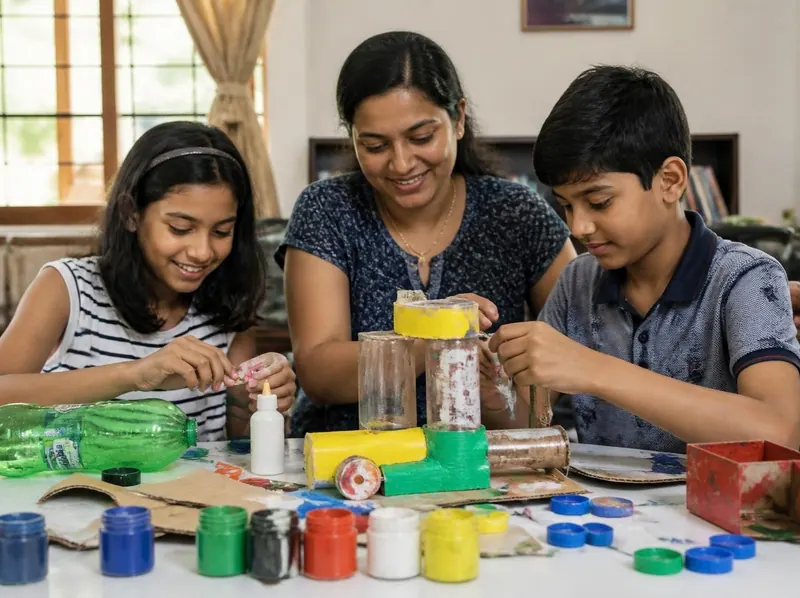
Two children and their mother making a craft project from plastic bottles and bottle caps
Made to order

Nothing is listed here yet. Ask us to make it.

Best Out of Waste are made to order. Tell us what you need on WhatsApp and we reply with whether it can be made, the price and a dispatch date.

Put this in your message

  • The topic or the idea
  • Your class
  • Any size limit set by your school
  • The date you need it by

About Best Out of Waste

Best-out-of-waste projects turn plastic bottles, cardboard, CDs, old motors and household scrap into working models: a wind turbine from bottles, a hydraulic lift from syringes and cardboard, drip irrigation from a bottle, a water filter from sand and gravel, a periscope from a box and two mirrors. Schools often set them as competition topics, and waste management is a common science exhibition theme.

Read the full overview

Models that can be made to order

  • A wind turbine or windmill from plastic bottles, with a small DC motor as the generator
  • A hydraulic lift or robotic arm from syringes, tubing and cardboard
  • Drip irrigation and rainwater harvesting models from bottles and pipes
  • A water filtration model with sand, charcoal and gravel layers in a cut bottle
  • A solar cooker from a box and foil
  • A water pump from a bottle and a DC motor

Building your own

  1. Choose one concept the model must show: energy conversion, filtration, pressure or irrigation.
  2. Collect clean, dry waste; wash bottles and remove labels so the model looks tidy.
  3. Add one working part, such as a motor, a pump or a light, so the judges see it in action. Components and Spares has the parts.
  4. Write a short card: what waste was used, what the model shows, and how the idea helps the environment.

Ordering

This category is made to order. Send the topic, the class and the date on WhatsApp, and we will reply with what can be made, the price and a dispatch date.

Ideas by class

The best entries turn waste into something that works and show one clear scientific idea.

Class 1 to 5Simple make-and-use models from clean waste.

  • Bird feeder from a bottle
  • Rain gauge from a bottle
  • Periscope from a box
  • Paper pinwheel

Class 6 to 8Waste plus one working idea: filtering, pressure or flow.

  • Water filter with sand and charcoal
  • Drip irrigation from a bottle
  • Hydraulic lift from syringes
  • Windmill from bottles

Class 9 and 10Waste with a motor, a pump or the sun doing work.

  • Solar cooker from a box
  • Water pump from a bottle
  • Rainwater harvesting
  • Wind turbine generator

These models can be asked for on WhatsApp.

Collecting and cleaning materials

Clean, sorted materials make a tidy model and a much easier build.

  • Wash and dry bottles, cans and boxes, with no food or drink left inside
  • Peel off labels so the model looks finished
  • Use plastic, card, CDs, bottle caps and wood; leave out glass and rusty metal
  • Collect a few extra of everything, for mistakes
  • Sort by type in separate bags: plastic, card, caps, wires
  • Keep one working part ready, such as a small motor, an LED or a buzzer

Safety notes

Waste materials bring their own hazards. These keep the build safe.

  • Cutting bottles

    Cut plastic edges are sharp. An adult makes the first cut; tape or sand the edges.

  • Hot glue

    Hot glue burns. Use a low-temperature gun with an adult nearby.

  • Clean waste only

    No medicine bottles or containers that held chemicals or cleaning products.

  • Water and circuits

    Keep water well away from batteries and wires in irrigation and pump models.

Ready-made, kit or your own build?

All three end with a model on the table. The right one depends on the time left and how much of the building the student will do.

  • Ready-made model

    Best whenWhen the date is close, or the circuit is beyond the class level.

    • Arrives assembled, so it can be tested the day it arrives
    • Check the listing for the board size, the power source and whether a report is included
    • Still read the report and run it several times: judges ask how it works
  • DIY kit

    Best whenWhen there are a few weeks and the learning matters most.

    • The student assembles it, which gives a lot to talk about
    • Plan time for building, testing and fixing
    • Needs basic tools, and an adult for cutting, hot glue or soldering
    DIY kits
  • Spare parts

    Best whenWhen you are repairing a model or building your own design.

    • Single parts: motors, LEDs, switches, batteries and wires
    • List what your circuit needs before you order
    • Test each part before you fix it in place
    Spare parts (22)

Making it

Building a best-out-of-waste model

A good recycled model looks like it was planned, because it was.

  1. Choose one concept

    The model must show one idea: energy conversion, filtration, pressure or irrigation.

  2. Sketch it

    Draw the model with rough sizes, and list the waste and the one working part you need.

  3. Collect and clean

    Gather clean, dry waste and a few spares of each item.

  4. Build the base

    A firm base first, then the structure, then the moving or working parts.

  5. Add the working part

    A motor, a pump or a light lets the judges see the idea in action.

  6. Write the card

    What waste was used, what the model shows, and how the idea helps the environment.

Tip: Keep a photo of the waste you started with: it makes the "before and after" easy to show.

Questions about Best Out of Waste

Still have a question?

Chat on WhatsApp
Can you make a best-out-of-waste model for me?

This range is made to order. Send the topic, the class and the date on WhatsApp, and we reply with what can be made, the price and a dispatch date.

Does a best-out-of-waste model need a working part?

It is not always required, but a motor, a pump or a light lets the judges see the idea in action and gives you something to demonstrate.

Which waste materials work best?

Clean plastic bottles, cardboard, bottle caps, CDs, ice-cream sticks, straws and old toy motors. Avoid glass, sharp metal and containers that held chemicals.

How do I show the environmental value?

Say what the waste was, how much you used and where it would have gone, and how the idea could help at home or at school.

WhatsApp us