- Physics
- Ready-made model
- Printed report included
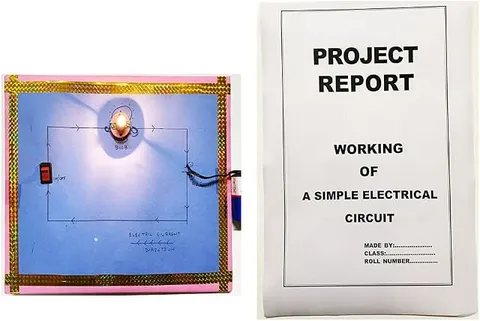
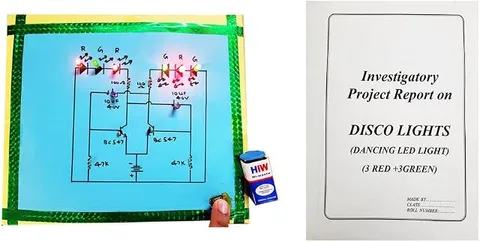
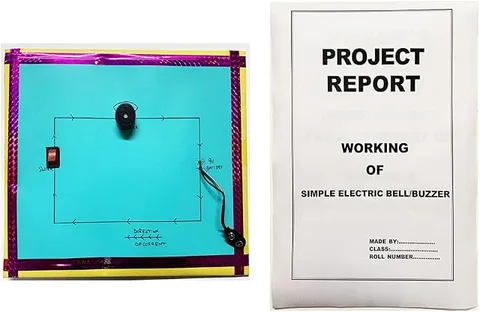
Simple Electronic Buzzer/ Bell Circuit Readymade Science Working Project & Model In Physics For School & College (With Printed Report), Multicolor
Code B099QYVDSY
- Paid for and delivered by Amazon. The current price and the delivery date for your PIN code are shown there.
- Sold by Gurukul Technicals Institute, Delhi.
- Need a different topic, a custom version or a school order? Ask on WhatsApp.
In this project guide
Ready-made model
About this model
This readymade model shows a simple buzzer or bell circuit, the kind of circuit behind a doorbell. It helps students learn how a closed circuit, a switch and a sound device work together, and the listing says it includes a printed report.
How it works
The science behind it
The idea the model demonstrates, in words you can use in your report and when you explain it.
A circuit makes sound only when it is complete. Pressing the switch closes the path, current flows from the source through the buzzer and back, and electrical energy is converted into sound energy. Releasing the switch breaks the path and the sound stops. The classic electric bell works on the magnetic effect of current. Current through a coil turns it into an electromagnet, which pulls an iron strip called the armature, and a small hammer on the strip strikes the gong. As the strip moves, it breaks the contact, the electromagnet switches off and a spring pulls the strip back, closing the contact again. This make-and-break repeats many times a second, so the bell keeps ringing. An electronic buzzer does the same job differently: an oscillator makes a thin piezo disc or a small diaphragm vibrate rapidly. The doorbell at home and the school bell between periods are everyday examples.
Make it yourself
Make a buzzer circuit and an electric bell yourself
Build your own version from scratch, or use the steps to understand how the ready-made model is put together before you present it.
What you need 10
Step by step 8 steps
- Make the simple circuit first
Connect the cells, the push button and the buzzer in series, with the buzzer's red lead towards positive.
Press the button and the buzzer sounds; release it and it stops, showing that sound needs a complete circuit.
For the bell, wind about 200 turns of enamelled wire on the bolt, sand the two ends bare, and fix the bolt upright on the base as an electromagnet.
Fix one end of the steel strip to a small block so the strip runs just above the top of the bolt, with the hammer at its free end close to the gong.
Fix the contact screw on its bracket so its tip just touches the back of the strip when the strip is at rest.
Wire the circuit in a loop: cells, push button, coil, contact screw, steel strip and back to the cells.
- Press the button
The magnet pulls the strip, the hammer strikes the gong, the strip leaves the screw and breaks the circuit, then springs back and closes it again, so the bell keeps ringing.
Adjust the contact screw and the gap above the magnet until the bell rings clearly and steadily.
Read this first
Safety first
Go through these points before you build or switch anything on. Younger students should do this with an adult.
- Use only the cell pack; never connect a bell or buzzer project to the mains, even though some real doorbells run on it.
- File the edges of the steel strip smooth, and keep fingers away from the hammer while the bell rings.
- Small sparks at the contact screw are normal at this voltage, but do not touch the contact while the bell is ringing.
- Use the glue gun and any cutting tools only with an adult.
- Ring the bell in short bursts: the coil has a low resistance, so it and the cells warm up if it rings for long.
Troubleshooting
If something does not work
The usual problems with this model and how to fix them. Open a problem to see the fix.
The buzzer is silent
Many buzzers work only one way round. Connect the red lead to positive, check the button's legs, and try fresh cells.
The bell's hammer sticks to the magnet
The contact screw is not breaking the circuit. Adjust it so the strip leaves the screw tip as soon as it is pulled down.
The hammer moves once and stops
The contact screw does not touch the strip at rest, so the circuit cannot close again. Turn the screw in until it just touches.
The bell rings weakly
The gap between strip and magnet is too wide, or the coil's wire ends still have enamel on them. Reduce the gap, sand the ends and fit fresh cells.
Exhibition day
How to present it
A running order for the exhibition table or the practical, step by step.
Press the switch and trace the full path the current takes around the circuit.
Draw the circuit diagram using standard symbols for the cell, switch and bell.
Explain the make-and-break action of an electric bell with a labelled diagram.
Ask the audience where they hear circuits like this every day.
Practice
Viva questions
Practice questions on this model, with short answers. Try each one aloud before you open the answer.
What energy change takes place in a buzzer?
Electrical energy is converted into sound energy.
On which effect of electric current does an electric bell work?
The magnetic effect of current, through an electromagnet.
Why does the bell stop when the switch is released?
The circuit becomes open, so no current flows.
What is the job of the contact screw in an electric bell?
It makes and breaks the circuit again and again, so the hammer keeps striking the gong.
Project file
Project file outline
The headings of the project file, in order. Give each heading its own section and write it in your own words.
The listing includes a printed project report: use this outline to check that your own file covers every part.
Free ebook: Writing a Science Project FileContents
- Aim: to make a buzzer circuit and an electric bell, and explain how they work
- A complete circuit, the switch, and the change of electrical energy into sound
- The magnetic effect of current and the electromagnet
- Working of the electric bell: make and break
- Circuit diagrams of the buzzer and the bell
- Construction of both models
- Observations, and the adjustments made to the bell
- Uses: doorbells, school bells, alarms and timers
- Conclusion and precautions
Buying checklist
Before you buy
What to check before you order the model, and what to do when it arrives.
1Before you order
- Check that the project suits your class and the chapter on electric circuits or the magnetic effects of current.
- The listing says a printed report is included; read it alongside your textbook and add your own observations.
- Read the listing for the battery it needs; do not assume one is in the box.
- Keep the box for transport so the switch and wires are not pulled loose.
- Check the delivery date for your PIN code on the marketplace, and order well before the exhibition or practical.
- Practise explaining it. Judges ask what the model shows and why; knowing the science matters as much as the model. The viva questions above are a good place to start.
2When it arrives
- When it arrives, press the switch several times to check the sound is clear and the button is firm.
Next steps
Take it further
Ways to turn this model into a bigger investigation or a stronger exhibition entry.
Add a second button at a 'back door', wired in parallel so either one rings the bell.
Add a lamp that lights with the bell, for people with hearing difficulty.
Use a 555 timer so the buzzer beeps on and off instead of sounding continuously.
Audience
Who it suits
Class 6 to 8 students learning about electric circuits and the effects of electric current.
- SubjectPhysics
- TypeReady-made model
- Project reportPrinted report included
Free to read
Free ebooks for this topic
Free PDF ebooks from Gurukul Technicals Institute on the science, the making and the presenting of projects like this one.
- Free PDF ebook
Electricity and Magnetism Experiments
Hands-on experiments with cells, wires, bulbs and magnets
- Free PDF ebook
Physics Working Models Explained
Twenty classic models, how each works and how to make it
- Free PDF ebook
Your Science Exhibition Guide
Choose a project, build it, present it and answer the judges with confidence
- Free PDF ebook
Writing a Science Project File
How to write the report, from the cover page to the bibliography