
Science exhibition topics
Best project for science exhibition: how to find a topic that is truly yours
Short answer
The best project for science exhibition starts from a problem you have noticed yourself, such as a tank that overflows most mornings, asks one question you can answer by measuring, and shows readings you took. A common topic becomes yours with a new question and your own data. Gurukul Technicals Institute lists working models to build on.
- A strong topic starts from
- A problem or question you noticed
- What makes it yours
- Your own question and readings
- Ideas on this page
- 24 questions across eight themes
- Starting points in the store
- Sensors, energy, environment, body, maths
- How to buy
- Amazon, Flipkart or WhatsApp
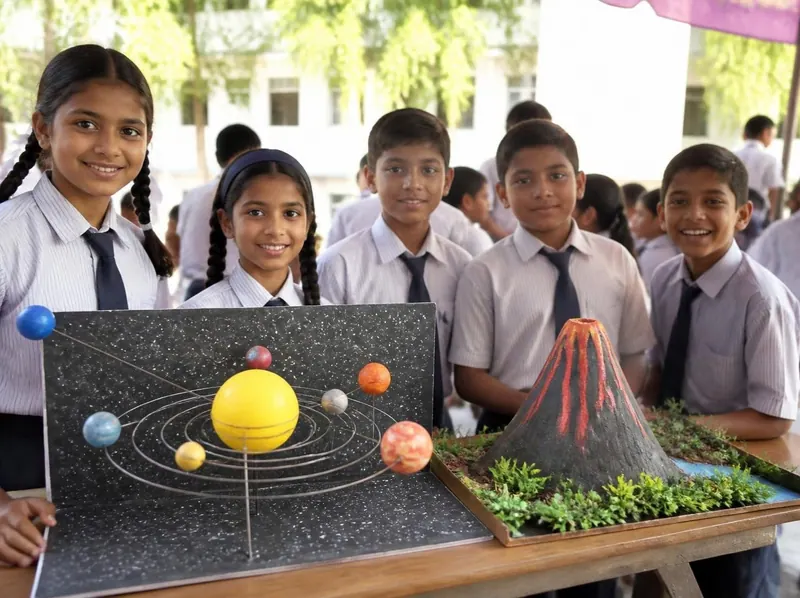
What makes a science exhibition topic stand out?
A judge remembers a project that asked a real question and answered it with evidence. The model is only part of that story.
A model is an object that shows how something works. A project is the whole piece of work around a question: why you asked it, what you did, what you measured and what you found. It usually contains a model, but a model alone is not yet a project.
| Point | A model | A project |
|---|---|---|
| Starts from | A principle or a chapter | A problem or question you noticed |
| On the table | The object, working or still | The setup, your readings, a chart and a logbook |
| Visitors learn | How something works | What you found out, and how you know |
| Judges ask | What does each part do? | Why this question, and what did your data show? |
| Makes it yours | How well you built and explain it | Your question and the readings you took |
This page is about the idea: the topic and its question. Building a model that is reliable and easy to read is covered on best model for science exhibition, and the exhibitions themselves, from school to national level, on project for science exhibition.
What the exhibition bodies look for
CBSE's and NCERT's exhibitions both mark originality and creativity (CBSE's full list). When NCERT screens national entries from write-ups and a short video, originality counts for more than any other criterion: a quarter of the total.
Which themes suit a science exhibition, class by class?
Eight themes that touch daily life, with a question for each class band: 24 in all.
| Theme | Class 6 to 8 | Class 9 and 10 | Class 11 and 12 |
|---|---|---|---|
| Environment | Do more birds visit a feeder near trees or one near the building? | How much cooler is the ground under a tree than in the open at noon? | Does a creeper on a sunny wall lower the temperature inside the room? |
| Water | Does washing a plate in a bowl use less water than under a running tap? | Which cover cuts evaporation from a bucket most: a cloth, a loose plate or a thin layer of cooking oil? | How does the conductivity of water from a tap, the school water cooler and a bottle compare? |
| Energy | Which colour of bottle warms water fastest in the sun? | Does a solar cooker box heat water faster with foil flaps than without? | Does a mirror beside a solar panel raise its current, and at what angle? |
| Health | Where around school does water stand long enough for mosquitoes to breed? | How often do classmates touch their faces in a lesson? | How much less light reaches the back benches than the front, measured with an LDR and a multimeter? |
| Farming | Which soil holds the most water: sand, clay or garden soil? | Are there more earthworms in soil with compost than without? | How much longer does a straw or leaf mulch, an old farming practice, keep pot soil moist than bare soil? |
| Safety | Which material on a school bag shows up from furthest in torch light? | Which shape of model building stays standing longest on a shaking table? | How much lower is a wet hand's resistance than a dry one's? |
| Waste | How much plastic packaging does our class throw away in a week? | Which kitchen scraps break down fastest in a compost bottle? | How much less reaches the mixed bin when the class separates waste? |
| Transport | How many vehicles stop for the zebra crossing at the school gate? | How does a toy car's stopping distance change on tiles, carpet and sand? | How does a trolley's stopping distance grow when it rolls off a higher ramp, and what does that say about speed near schools? |
Several of these themes match current CBSE and NCERT sub-themes, such as green energy, health and disaster management; check the latest circular with your teacher. For class 12 physics, see physics project for class 12. For class 1 to 5, the free lessons for kids are full of small questions.
Fieldwork near roads, water, heat and electricity
Count traffic from the footpath with a teacher, never from the road.
Spot standing water without touching it, and tell an adult.
Solar cooker water can scald: lift the pot with a thick cloth, and never stare into the foil flaps.
Test a hand's resistance only on a multimeter's resistance setting, never with a battery or any other supply connected.
Where do strong project topics come from?
Strong topics rarely come from a list of titles. They start with something you noticed and wanted to understand, fix or measure.
Look around before you look anything up. A judge who hears "our tank overflows most mornings, so we measured how much water goes down the drain" listens, because the student clearly cares.
| Where to look | What to notice | A question it could lead to |
|---|---|---|
| Your home | Curd that sets faster on some days | Does the room temperature change how long curd takes to set? |
| Your school | A classroom that bakes after lunch | Which classroom gets hottest, and does it face west? |
| Your street | Waterlogging after rain | Which stretch of our lane floods first, and how deep? |
| A farm or garden | Plants that droop by afternoon | Which garden plants wilt first on a hot day? |
| Your own body | Posture under a heavy bag | How far does a heavy school bag make me lean forward? |
| The news | A flood far away | Which model embankment holds back water for longest? |
Chapters work too. A line you only half believe, such as "dark surfaces absorb more heat", becomes a project when you ask "how much more, and does it matter for the tank on our roof?"

How do you turn a big topic into one sharp question?
A topic is a subject; a question is something you can answer with evidence. Exhibitions reward the second.
| Too wide | Testable | What you would measure |
|---|---|---|
| Pollution | Is there more dust on leaves by the main road than in the school garden? | Dust lifted with clear tape from equal-sized leaves, and specks counted in a 1 cm square under a hand lens |
| Saving water | How much water does one dripping tap waste in a day? | Water caught in a measuring jug for one hour, scaled up to a day |
| Solar energy | How much does dust cut the output of a small solar panel? | The panel's current, clean and dusty, under the same lamp |
| Health | Is reaction time slower at the end of the school day? | Ruler-drop distance, five tries in the morning and five after school |
| Maths around us | Which route from the gate to our classroom is shortest? | Each route measured with a tape, or counted in equal steps |
The method that then answers it, with variables and a prediction, is on class 12 investigatory project physics, set out with class 12 physics plans; the method itself works in any class.
Write the topic in one word
Water, light, dust, waste, reaction time: whatever caught your eye.
Ask "how much" or "which"
"Water" becomes "how much water does our tank lose when it overflows?"
Decide what you will compare
Two places, two materials, two times of day, or before and after a change.
Check you can measure it with what you have
A ruler, thermometer, jug, stopwatch, multimeter or a tally. If you cannot measure it, rewrite the question.
Check it is safe and fits the time
Cells, not the mains; no flames or strong chemicals; readings finished well before the exhibition.
Write it as one sentence and show your teacher
If your teacher can tell from it what you will compare and measure, it is ready.
The data can be counts, measurements and times, meter readings from a circuit on cells, or survey answers. Repeat each reading, log it at once with its unit, and show what you found as a table and a graph. Some need one step of working: in the ruler-drop test, reaction time t = √(2d ÷ g), with d the distance the ruler fell in metres and g about 9.8 m/s². A 0.20 m fall means about 0.2 s, and a shorter fall a quicker reaction.
Measuring safely
Use a multimeter only on cells, batteries and small panels, or on its resistance setting on unpowered things such as a hand or a cup of water; never on a wall socket.
On a current range, a meter wired straight across a cell or battery is almost a short circuit that can blow its fuse: connect it in series.
If you use a lamp, an adult plugs it in; keep the hot bulb away from the panel and never touch it while it is on.
Never look at the sun to line up a panel: turn it until the shadow of a pencil standing upright on it is shortest, or until the meter reading is highest. Never aim a mirror's reflection at anyone's face.
Put earthworms and insects back where you found them, and wash your hands after soil, compost or waste.
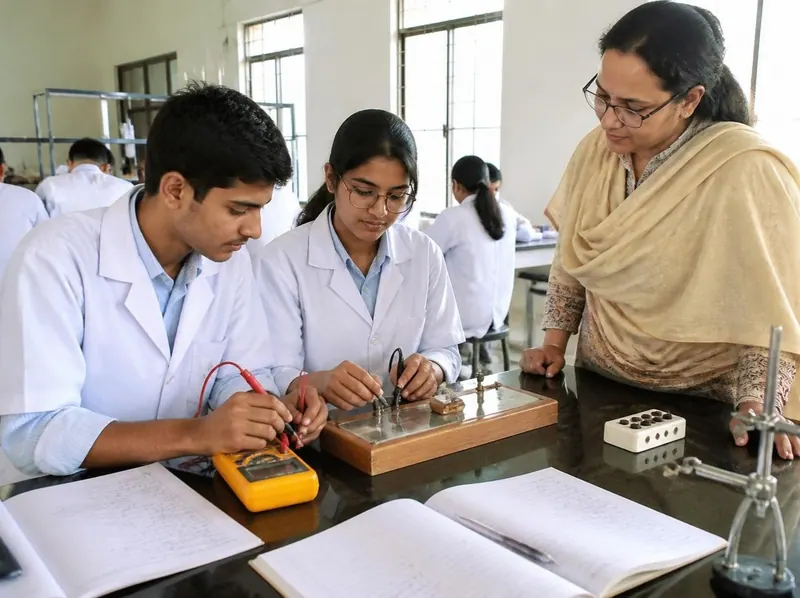
How do you make a common topic your own?
Some topics appear at nearly every exhibition. You can still choose one, if you go further than everyone else.
The Department of Science and Technology, which runs INSPIRE-MANAK, publishes a list of common ideas whose entries it will not encourage: the windmill and street light, rain, fire and earthquake alarms, the gas leakage detector, the smart blind stick, the anti-sleep alarm for drivers, the potato battery and the periscope. It may still consider a real improvement on one, and asks schools to check originality with a web search. Do that yourself: if the results show your exact project, keep the topic and change the question.

| Common topic | A question of your own | What you would measure |
|---|---|---|
| Automatic street light | Does it switch on at the right moment for our lane? | Switch-on time each evening for a week, beside sunset time |
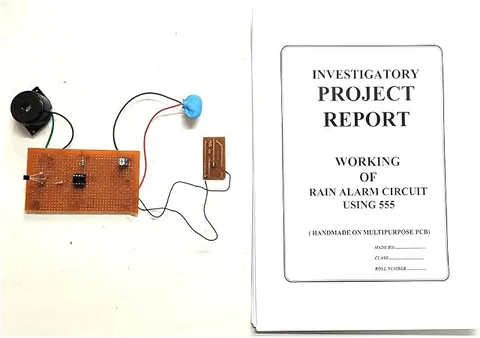
| Rain alarm | Does morning dew set it off by mistake? | Drops needed to trigger it; false alarms on dewy mornings |
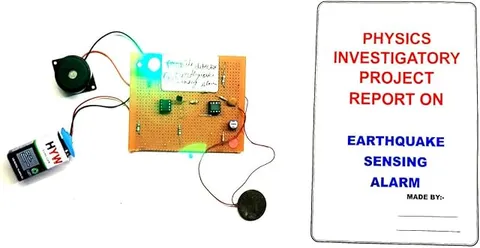
| Earthquake alarm | How hard a knock, and from how far away, sets it off by mistake? | The furthest a dropped book or slammed door still sets it off, at two settings of its preset |
| Smoke detector | How much longer does smoke take to reach it from further away? | Seconds to sound at five distances, after warm-up, with fans off, and silent again before each try |
| Smart blind stick | Does it notice a thin pole or a dark cloth bag as early as a wall? | The distance at which it buzzes for each, walking up slowly five times |
| Fence burglar alarm | Which thin wire snaps when someone pushes through, but not in the wind? | Coins added to a bag hung from each wire until it snaps, three of each |
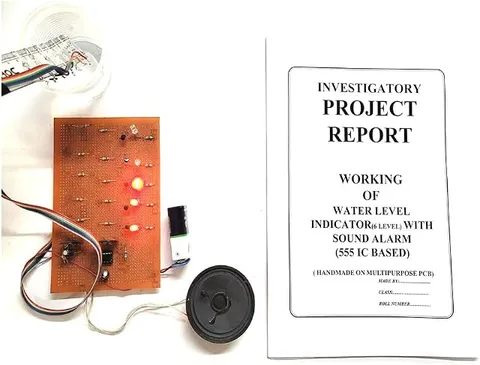
| Water level alarm | How much water does our building lose each time the tank overflows? | Overflow caught in a bucket at ground level for one minute, and how long it lasts |
| Greenhouse effect | How much cooler does a model car stay in the sun with a window open a crack? | The temperature in two shoebox cars with plastic windows, one shut, one open a crack, every five minutes |
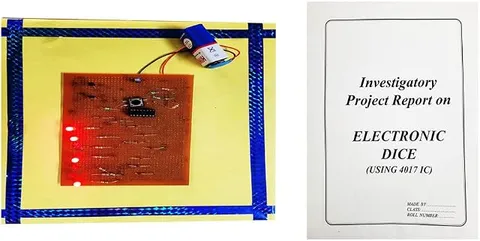
| Electronic dice | Is it really fair? | A tally of 120 throws against the 20 per face expected, repeated, since some spread is normal: suspect a face only if it is far off every time |
Show the limits as well as the result
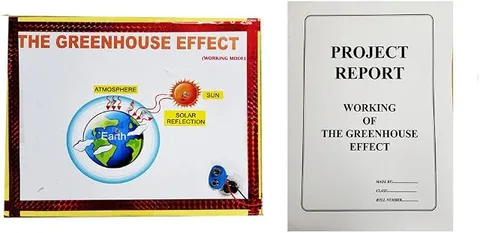
Say where your project falls short. A shut car warms mainly by trapping warm air, while greenhouse gases warm the Earth by absorbing infrared radiation. Saying so on the chart shows you understood the science, not only the model.
The cards below are common ideas, not finished projects: add a question and readings from the table above, or your own for the fire alarm board, and each one becomes yours.
Common sensor and alarm ideas to take further
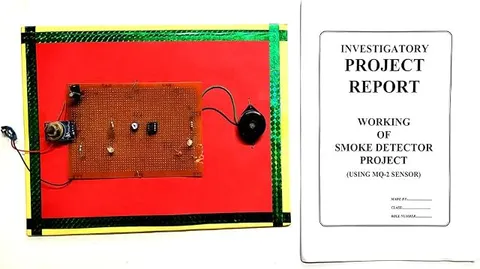
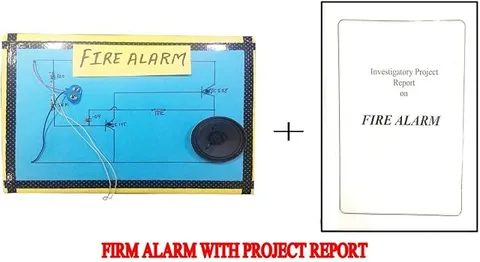
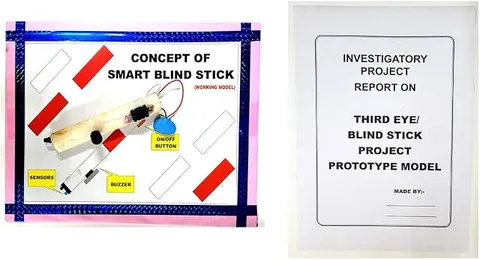
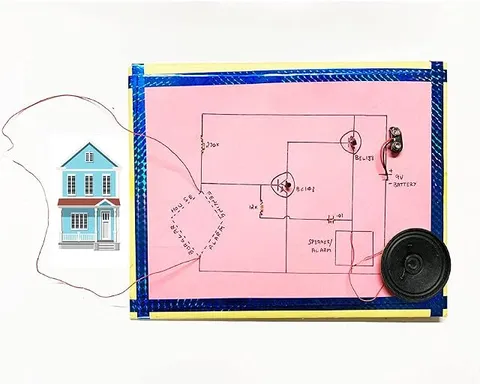
Alarms and sensors on the table
Run each one on the supply its own page names, unclipped between tests.
An MQ2 smoke sensor needs a regulated 5 V supply, never 9 V straight onto it. Its heater gets hot, so hold it by the board's edges, and test it only with a blown-out incense stick held by an adult, never a flame or gas.
Trigger the fire alarm board's sensor wires the way its seller describes, never with a flame, a candle or burning paper; a heat sensor needs only warm fingers or a hair dryer on low, held by an adult.
Keep a rain alarm's circuit board dry: only the sensing strips should get wet.
Each card links to where you can buy the project, on Amazon or Flipkart, and to WhatsApp to order it or ask about it. A bought model is not the project, and NCERT's guidelines rule out ready-made exhibits; see what each level allows.
Which boards can you build your own question around?
Each board shows a principle; the project is the question and measurement you add beside it.
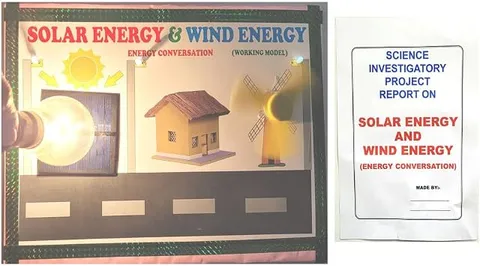
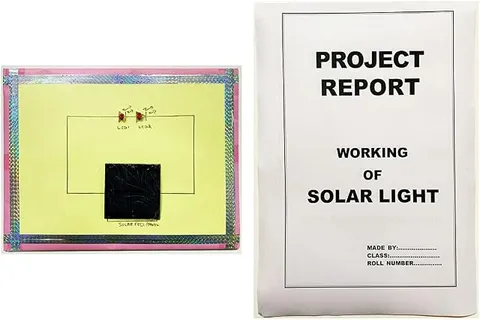
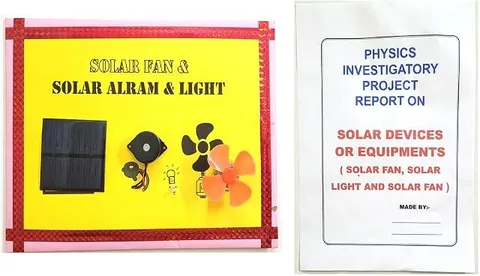
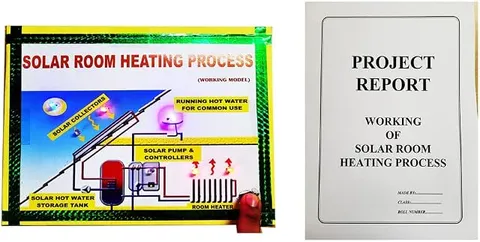
Energy: measure the source, not only the model
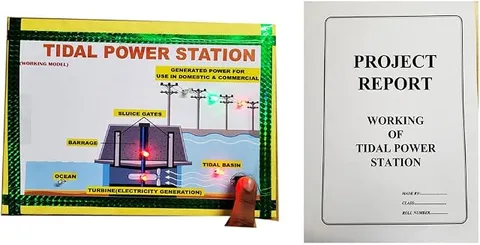
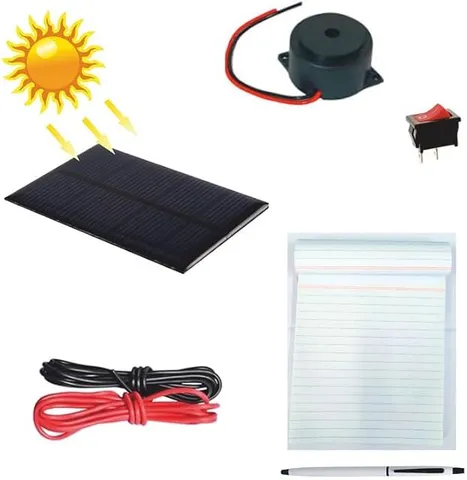
An energy board shows where electricity or heat comes from; your project asks how much, and what reduces it. Measure a small panel's current with dust, shade, angle or a mirror: its voltage with nothing connected changes far less with light. Beside the tidal board, count a small water wheel's turns as water falls onto it from greater heights: a real barrage works on the difference in level between sea and basin.
Energy boards, and a panel to measure
Environment, water, waste and farming
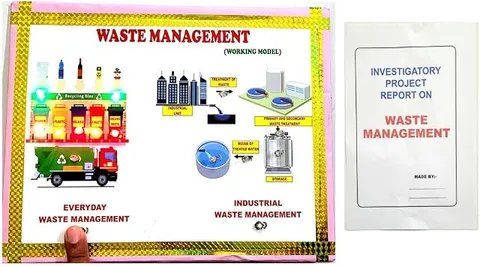
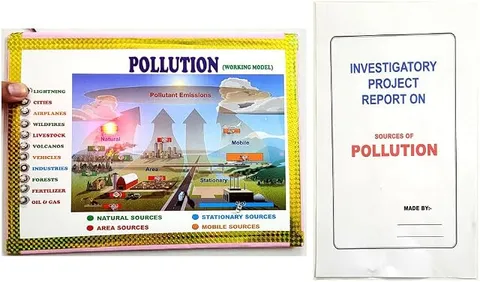
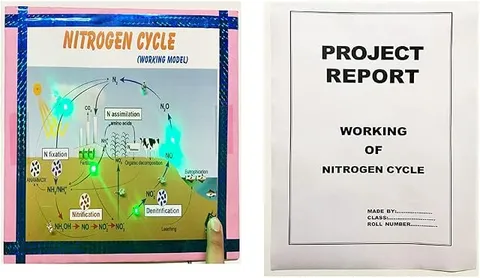
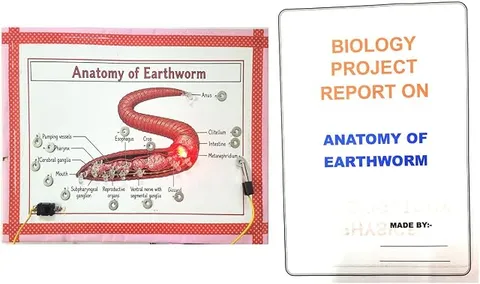
Pair a cycle or system board with your own measurement: a week of weighing class bins, the overflow you caught, or earthworms counted in soil with and without compost.
Boards to pair with a measurement of your own
Health and the human body
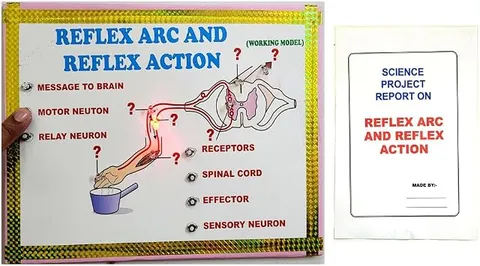
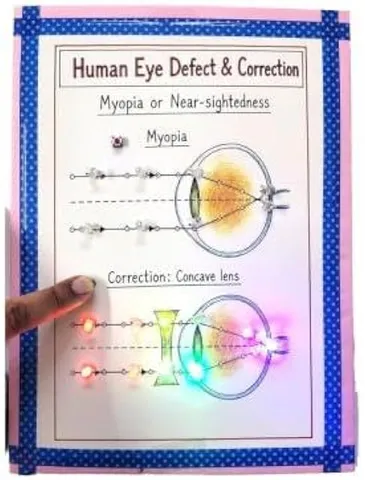
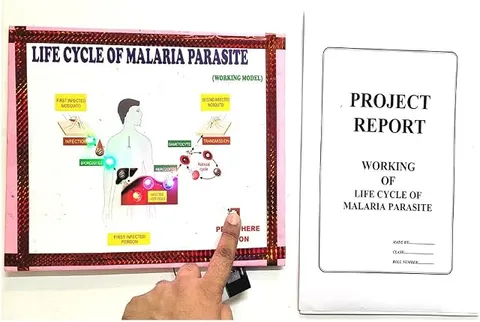
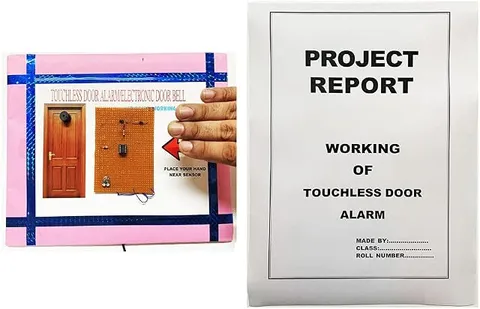
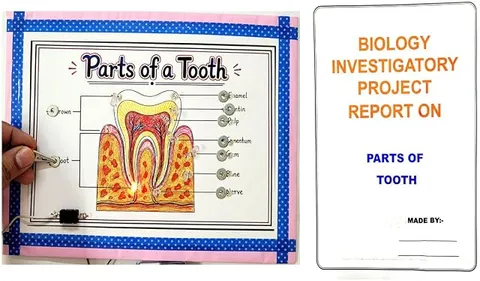
Set the reflex arc beside a ruler-drop test, explaining that catching the ruler is not a reflex: the message goes through the brain, so it is slower than pulling a hand back from a hot tawa. Pair the myopia board with a reading-distance survey, the malaria cycle with a map of standing water, and the touch-free doorbell with a count of hands on the ordinary bell. Beside the tooth model, soak eggshell in water, lemon juice and cola for a day, then dry and weigh it: like enamel, eggshell is a hard calcium compound that acids attack.
Body and hygiene models to build a question around
Road safety: timing and sensing
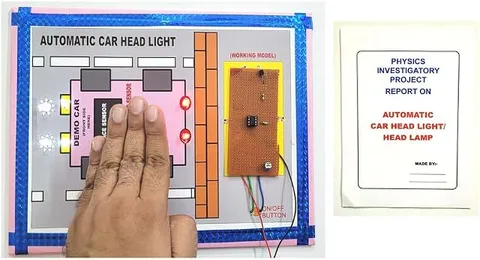
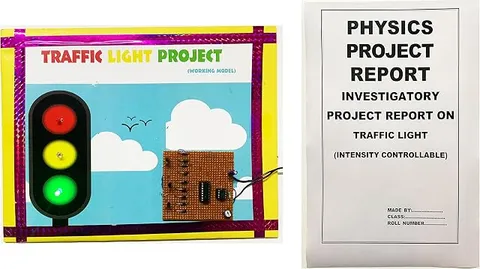
Road safety suits timing: when does an automatic headlight switch on as the light fades, and would a traffic light's green time let a slow walker cross outside your gate?
Road safety models to time
Maths: questions you answer by counting or measuring
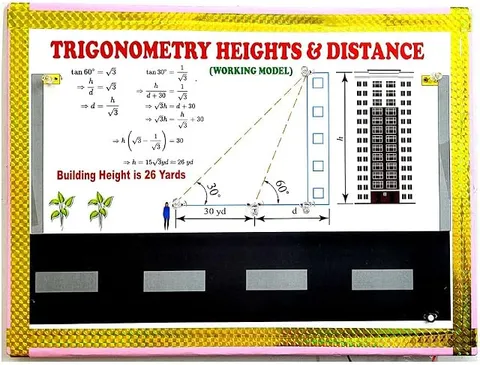
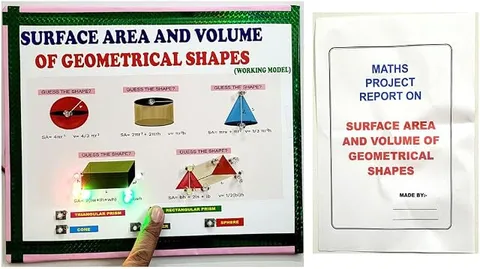
Maths suits measurement: the heights board for finding your school building's height from an angle and a distance on the ground, the dice for a fairness tally, and the solids board for asking which box holds most for the least cardboard.
Maths models to measure with
How do you choose between two or three topic ideas?
Score each idea on your short list on the same seven points, and the choice usually makes itself.
| Point | 0 points | 1 point | 2 points |
|---|---|---|---|
| It matters | Nobody would miss the answer | It matters to you | Someone else would use the answer |
| It fits | Fits neither the theme nor a lesson | Fits one | Fits the exhibition theme and a lesson you have studied |
| You can test it | Only by reading about it | You can show it working | You change one thing and measure the result |
| You can finish it | Needs equipment or time you do not have | Tight, but possible | Readings done in good time |
| It is safe | Mains power, flames or strong chemicals | Needs an adult throughout | Cells or batteries and everyday materials |
| It is yours | Copied as it is | Adapted from a known project | Your own question or your own data |
| You can explain it | Only with notes | Most of it | You could teach it to a younger student |
Add up each idea's score out of 14; a 0 for safety rules it out. Between close scores, take the one higher on "it is yours" and "you can test it": they separate a project from a display.

The scoring table, your question and a problem-first talk plan are on a printable topic scoring sheet; more are on the printable checklists page.
What should your project logbook show?
The logbook proves the project grew in your hands. A judge who doubts the work is yours may ask to see it.
Start it on the day you choose the topic, not when building begins. The first pages matter most: the ideas you considered, the scores you gave them and why you chose one. Then come the question, the prediction and the plan, and only then the readings.
| Entry | What I did | What I saw or measured | What next |
|---|---|---|---|
| First day | Listed three ideas and scored each one on the sheet | The tank overflow scored highest | Ask when the pump runs |
| Second entry | Caught the overflow in a bucket for one minute, three times | Three volumes in litres, written as measured | Time a whole overflow |
| Third entry | Timed overflows on three mornings | Each time, with the hour the pump started | Work out litres lost per overflow |
| Later entry | Showed the caretaker the litres lost; tested a model alarm in a jar marked at the overflow height | Whether it sounded at the mark every time | Ask the caretaker to count overflows for a week |
Measuring at the tank
Never climb onto the roof or a tank stand. Catch the overflow where the pipe reaches the ground.
Let the caretaker or another adult fit or check anything at the tank, and never touch the pump or its wiring yourself.
Never put a model alarm's probes in the building's tank: its pump runs on mains, and the probes corrode in drinking water.
- Keep the failures, and why they happened: they show real work.
- Write surprises down at once, even when they do not fit the plan.
- Note who helped, and with what. Honesty about help is respected.
The free ebook Writing a Science Project File turns a logbook into a report.
How should a team share a science project?
A team takes more readings and catches more mistakes, if the work is shared from the first day.
| Stage | What to agree | Watch out for |
|---|---|---|
| Choosing the topic | Each member brings an idea; score them together | One voice deciding for all |
| Planning | Who measures what, and with which instrument | Two members measuring the same thing in different ways, so the readings cannot be compared |
| Collecting data | One logbook, each entry dated and signed | Readings scattered across phones |
| Building | Who builds each part, and who checks it | Only one member understanding the circuit |
| Presenting | Everyone can tell the whole story | Nobody able to answer outside their part |
When you disagree about a design, test both and let the readings decide; the comparison becomes part of the project. Check the exhibition notice for the team size before you share out the work.
How should you start explaining your project to the judges?
A model's talk opens with its effect; a project's opens with the problem, which tells visitors why the rest matters.
The problem, in one sentence
"Our building's tank overflows most mornings, straight into the drain."
Why it matters here
Who it affects, and what it costs in water, time, health or safety.
Your question
"How much water is lost, and can a simple alarm stop it?"
What you did
The setup and the one thing you changed, on the model or in a logbook photo.
What you found
The graph first, then one sentence on what it shows and how sure you are.
What you would do next
One limit you found and how you would test further. Then invite questions.
Lay the chart out in the same order: the question itself as the title, the problem on the left, your setup in the middle and your graph on the right.
To practise for the judges, try Your Science Exhibition Guide and the viva questions ebook; senior students can add Investigatory Projects for Class 11 and 12.
Find more questions by class and subject
Questions about choosing a science exhibition project
Short answers to what students, parents and teachers ask about projects most often. Tap a question to open its answer.
Which is the best project for science exhibition?
There is no single one. The projects that stand out ask a real question and answer it with readings, such as how much water one dripping tap wastes in a day, or whether reaction time slows by the end of the school day. A simple topic done that way beats an unusual one that is only displayed.
How do I find an original idea for a science project?
Start with what is around you: home, school, your street and the news. Note anything wasteful, unsafe or puzzling, then ask "how much" or "which" about it, and search the idea to check your exact project is not already everywhere.
What is the difference between a science project and a science model?
A model shows how something works. A project is the work around a question, from why you asked it to what your readings show. A model on its own is a demonstration.
Which science exhibition topics are overused?
One official list is DST's common ideas for INSPIRE-MANAK, among them the rain and fire alarms, the automatic street light and the smart blind stick. DST also asks schools not to nominate projects that only demonstrate a textbook concept. A common topic still works if you keep it and change the question.
What makes a good testable question for a science project?
It can be answered with evidence, safely and in time, using what you have. Questions beginning "how much", "how fast" or "which" work well, because their answers are numbers or comparisons.
Can a survey be a science exhibition project?
Yes, if the answers settle a question, such as whether classmates who sleep less say they feel drowsy in the first lesson. Ask everyone the same questions in the same words, leave names off, get your teacher's permission first, and show the answers as a table and a graph.
Can my science project be about a problem in my own area?
Yes, and it is often the strongest choice. A local problem gives you a reason to care, real data and a ready answer when a judge asks why you chose it.
Can a science exhibition project have no working model?
Yes, where the exhibition allows it: CBSE lists an investigation-based study among the kinds of project for its own exhibition. Show the setup, your readings as a table and a graph, and the logbook. Build a model only if it helps answer your question.
Do judges look at the project logbook?
Often, especially to check whether the work is yours. A dated logbook with your topic choice, prediction, raw readings and changes answers that better than anything you can say.
Delhi head office
Have a topic, but no model to build it on?
Send the Delhi head office your topic, your class and the exhibition date on WhatsApp. Ask which listed project is the closest starting point, or whether one on your own topic can be made in time.