
Science exhibition models
Best model for science exhibition: pick one that works, teaches and draws a crowd
Short answer
The best model for science exhibition works every time, shows one principle, reads from a few steps away, lets visitors try it, is safe to handle, and has no part you cannot explain. Two examples: a syringe brake and a water level indicator. Gurukul Technicals Institute lists such models, to buy on Amazon or Flipkart or order on WhatsApp.
- Tests on this page
- Six, each one you can run at home
- Subjects in the store
- Physics, chemistry, biology, maths, earth and space
- Printed report
- Included with many listed models
- How to buy
- Amazon, Flipkart or WhatsApp
What makes a model stand out at a science exhibition?
A visitor decides in seconds whether to stop at your table; a judge decides in minutes how much you understand. Six qualities of the model settle both, and each can be tested at home.
What judges score, and how to match a model to your class, is in the guide on how to choose a working model for a science exhibition. This page is about the object on the table.
| Quality | What it looks like on the table | How to test it at home |
|---|---|---|
| Works every time | The effect appears at once, on the first try and the fiftieth | Switch it off and on twenty times in a row; carry it round the house in its box, then run it again |
| Shows one principle clearly | One idea, named in the title, and nothing that pulls attention from it | Let someone watch for ten seconds and say what it shows; if they cannot, remove a part or retitle it |
| Reads from a few steps away | A title and labels readable from three steps back, and a moving or lit part big enough to see from there | Photograph it on a phone from three steps back and check every label in the photo |
| Lets a visitor try it | A button, a syringe, a lever or a sample tray, so visitors discover the effect themselves | Hand it to a younger child with no instructions and watch what they do first |
| Runs on safe power | A battery or cells, wires taped flat, no bare joints, nothing hot or sharp within reach | After a long run, feel every part for warmth and check the battery snap and switch |
| You can explain every part | Point at any component and say what it does, and what would happen without it | Let a friend point at random parts; read up on any you could not explain |
A bigger model with more parts does not score higher by itself, and the judging at CBSE's and NCERT's exhibitions gives credit for low cost, portability and durability (the guide above lists every criterion). One motor that always turns beats five circuits that work on the second try. If a part does not help show the principle, leave it off.
When your model is a common one
The windmill, the automatic street light, the smart dustbin and the burglar alarm turn up at many school exhibitions. The Department of Science and Technology (DST), which runs INSPIRE-MANAK, lists ideas like these as overused, but says a real improvement on one may still be considered for nomination. You can take a common model; what makes it yours is one thing visitors have not seen.
- Add a reading. A meter or a scale: the windmill's output as the fan speeds up, or how far a compass needle swings as the current changes.
- Add a comparison. Three blade shapes on one windmill, or a street light with and without its sensor.
- Let the visitor change one thing. The fan's speed in front of the windmill, or a card to slide over the solar panel, so visitors see the effect change in their own hands.
Finding a question of your own for a common topic is on best project for science exhibition.
Working, static or interactive: which kind of model holds attention?
Exhibition models come in three kinds, and the difference is who does something at the table: nobody, you, or the visitor.

A static model can be accurate and handsome, but there is nothing to wait for, so visitors look once and walk on. A working model gives them something to watch, and an interactive one something to do.
| Kind | Examples | Where it fits |
|---|---|---|
| Static | A cross-section of the earth, a cell made from clay, a clay volcano cut open to show its magma chamber | A structure that cannot move, or a first model in the junior classes |
| Working | A windmill turning in a fan's breeze, a lunar eclipse lit by LEDs, an electromagnet lifting washers | A process: energy changing form, current switching, blood or water moving |
| Interactive | A quiz board, a syringe brake, a conductor tester, a steadiness game | A busy hall, younger visitors, anything a visitor can safely handle |
Turning a working model into an interactive one
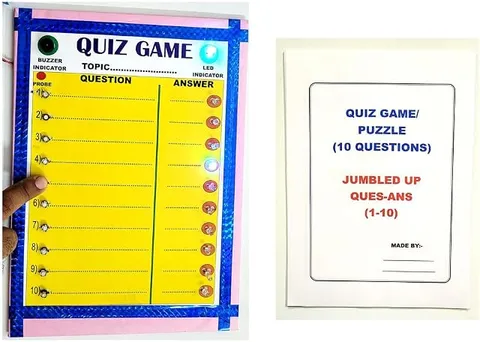
- Add a push-button quiz. A button beside each name lights the matching part, so visitors test themselves.
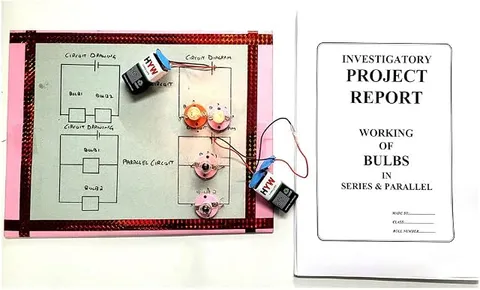
- Put two versions side by side. Series and parallel bulbs, or a covered and an open solar panel.
- Hand the visitor a control. A knob, a cover or a lever they work themselves, with a short card saying what to try.
To add a working part to a static model in the first place, see the guide to choosing a working model.
Lit charts and quiz boards
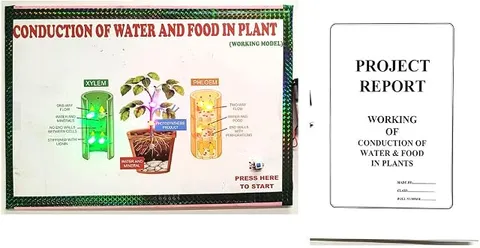
Many ready-made boards are printed charts with LEDs and push buttons: they name the parts of a system well and make good quiz boards. To show the process really happening, set one real demonstration beside the chart, such as a balsam stem left in water coloured with red ink next to a plant transport board, so visitors see the red that has climbed into its veins.
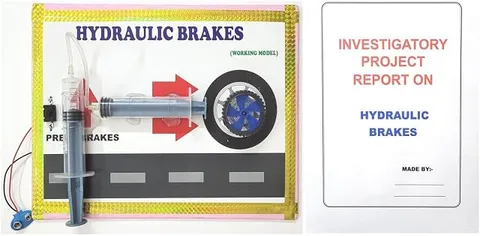
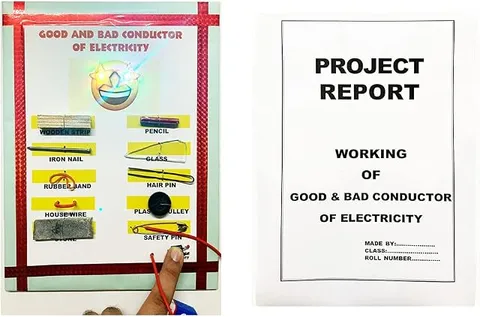
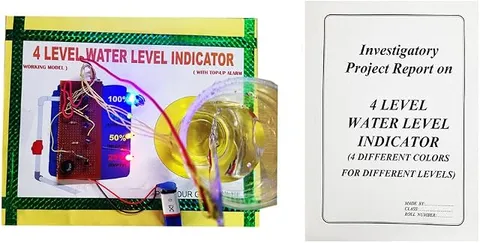
Models visitors can work themselves. The syringe brake puts Pascal's law in a visitor's hands: push one piston and the other moves. The steadiness tester turns a closed circuit into a game, the conductor tester checks whatever a visitor finds in a pocket, such as a coin, a key or an eraser, and the water level indicator lights up level by level as they pour.
Models a visitor can try with their own hands

For the youngest classes, a simple activity can grow into an interactive model: the free lessons for kids have short science activities to start from.
Which models work well for each subject?
A good exhibition pick has an effect a visitor can see and a principle you can name in one sentence. Each group below says why its models work on the table, and every card opens the model's own page.
| Model | Class | Principle | Kind | Why it works on the table |
|---|---|---|---|---|
| Syringe hydraulic brake | 8 to 11 | Pascal's law | Interactive | The visitor pushes one piston and sees the other move |
| Water level indicator | 7 to 10 | Water with dissolved salts conducts | Interactive | Lights come on level by level as water is poured in |
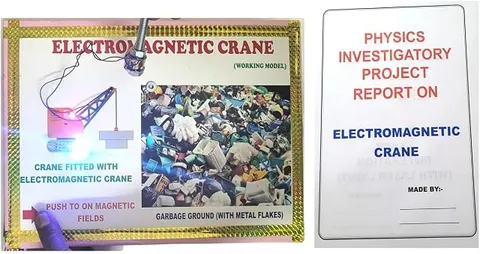
| Electromagnetic crane | 6 to 10 | Magnetic effect of current | Working | The load drops the moment the button is released |
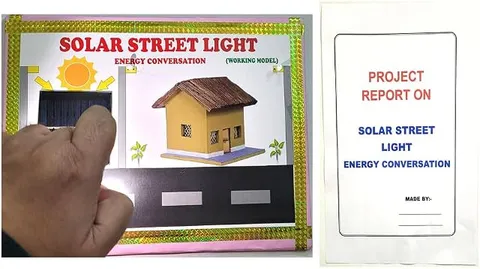
| Solar street light | 6 to 10 | Solar energy, with the panel sensing the dark | Interactive | Cover the panel and the street lights come on |
| Circulatory system chart | 7 to 10 | Double circulation | Interactive | Visitors touch the probe to a label's contact and that part lights up |
| Lunar eclipse board | 6 to 9 | Light travels in straight lines, so the earth casts a shadow | Working | The moon sits in the earth's shadow, with umbra and penumbra labelled |
| Metals and non-metals tester | 6 to 10 | Metals conduct electricity | Interactive | Visitors test their own objects and the LED answers |
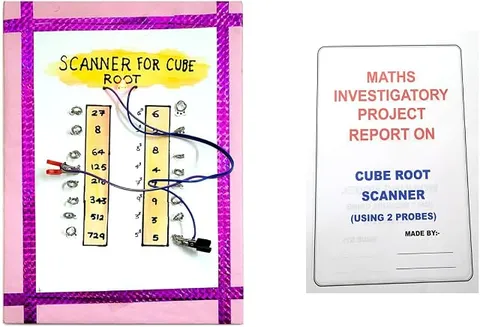
| Cube root scanner | 8 and 9 | Cubes and cube roots | Interactive | Only a correct pair of probes lights the LED |
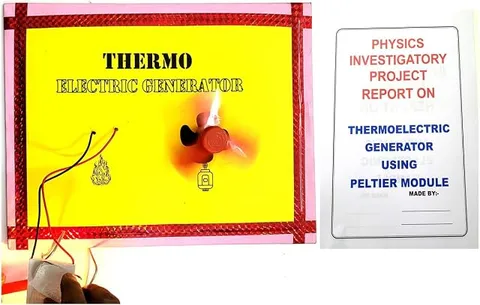
| Thermoelectric generator | 11 and 12 | Seebeck effect | Working | Hot water under one face, with the other kept cool, turns a fan; no moving part in the module |
| Subject | What makes a strong model | Watch out for |
|---|---|---|
| Electricity and magnetism | An effect you switch on and off: a bulb lights, a needle swings, a magnet lets go | A flat battery; a compass board placed near steel or a phone |
| Energy and environment | A chain of energy changes you can trace from source to use | Solar panels under weak hall lights; carry a bright torch or lamp |
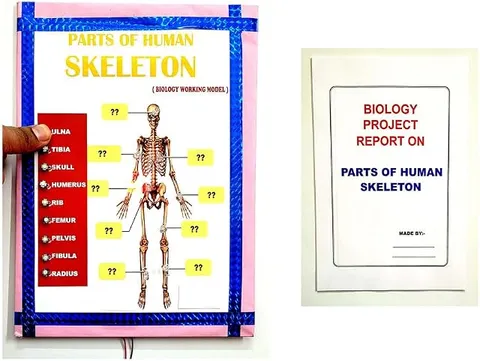
| Biology | Lights that follow a path through a system, or a quiz on its parts | Too many labels, or a diagram you cannot explain |
| Earth and space | Positions you can light: eclipses, phases of the moon, the planets in order | Scale: say that sizes and distances are not to scale |
| Chemistry | A safe test a visitor can repeat, such as conductivity | Acids, flames or reactions at a crowded table without a teacher |
| Maths | A pattern or a trick the visitor checks for themselves | A chart of formulas with nothing to do |
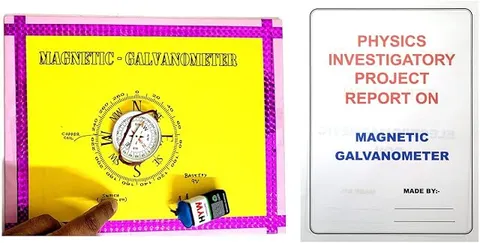
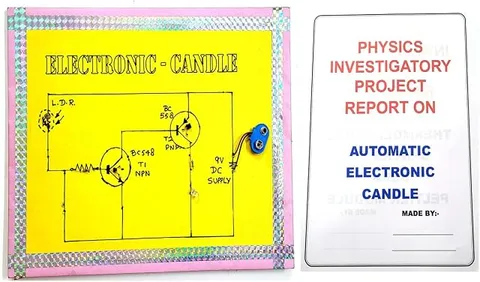
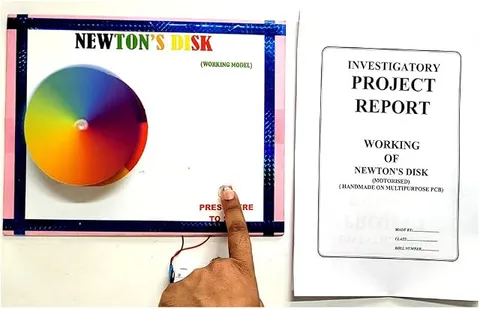
Circuits, magnets and light. The effect is instant and reversible. Bulbs in series glow dimmer than bulbs in parallel, because they share the voltage. The crane's electromagnet holds washers while the button is pressed and drops them when you let go. The galvanometer's compass needle swings away from north while current flows, which is Oersted's discovery on a board. Cup a palm over the electronic candle's light sensor and it reacts by itself, and Newton's disc spins its colours into a pale, nearly white blur.
Physics: circuits, magnets and light, class 6 to 10
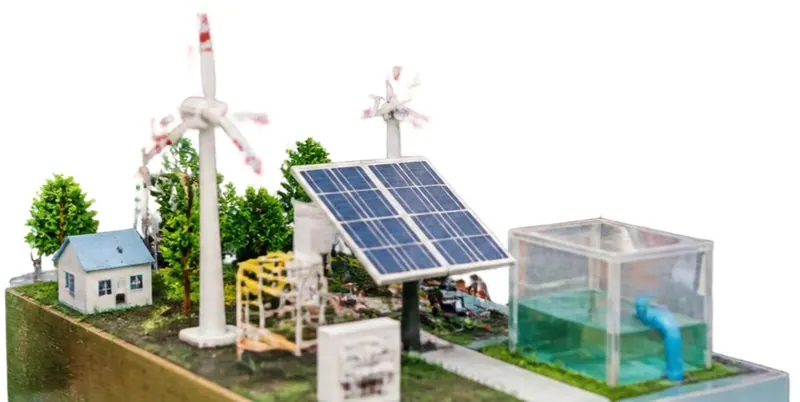
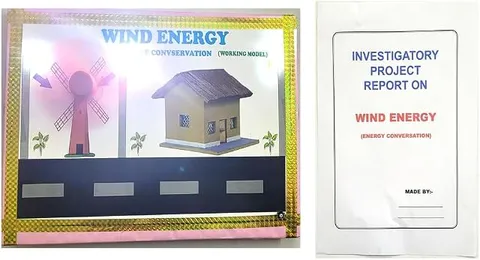
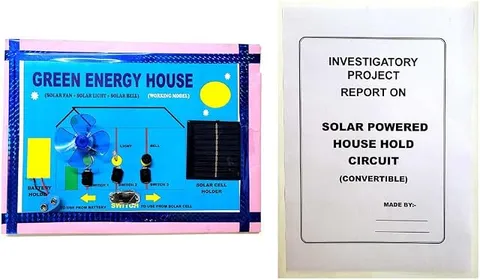
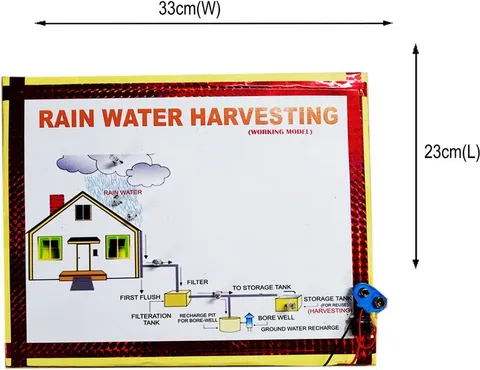
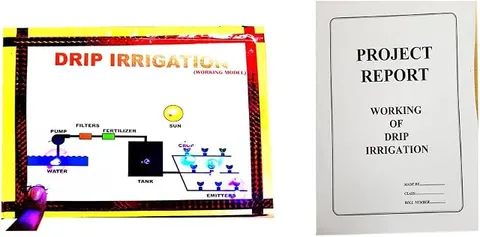
Energy and the environment. These do well when the whole chain is visible: a table fan turns the windmill's blades, and its small generator turns that motion into electricity. The green energy house switches its fan, light and bell between a solar cell and a 9 V battery. On the solar street light, a visitor covers the panel to make night and the street lights come on. The rainwater and drip irrigation boards light the path the water takes.
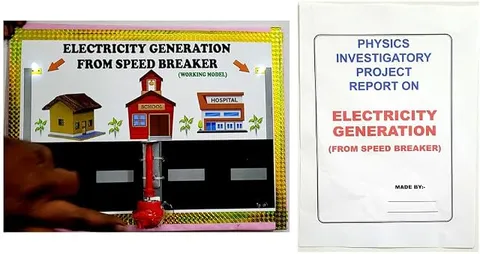
The windmill, the solar street light and rainwater harvesting are on DST's list of overused ideas, and so are the electromagnet crane above and the speed breaker further down. Choose one if you like it, and add one of the changes listed at the top of this page.
Energy and environment: follow the energy or the water
A fan, water and sunlight at the table
If a windmill needs a table fan, an adult plugs the fan in, and its cable stays well away from the model's own wires.
Keep any water in a tray, away from the battery and the switch, and wipe up spills at once.
Never look at the sun to line up a solar panel; point it at the brightest part of the sky, or use a lamp.
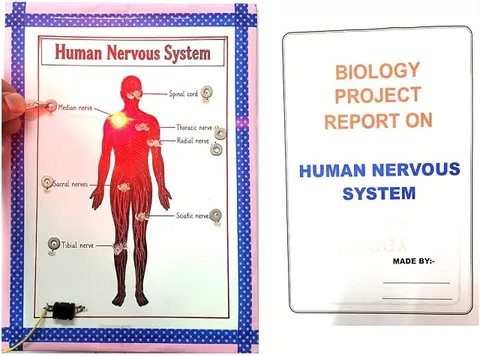
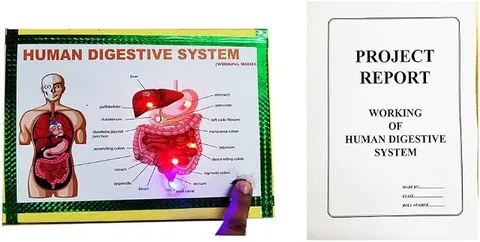
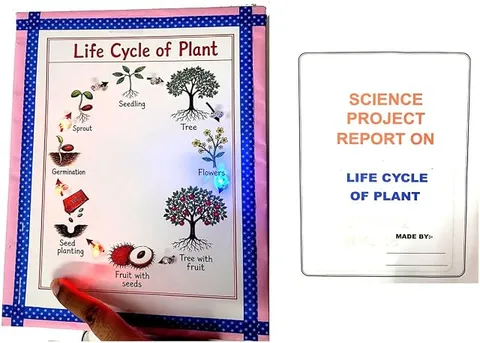
Biology. A body system cannot be switched on, so strong biology models light up the parts of a system, or let visitors quiz themselves on them. On the circulatory and nervous system charts, a visitor touches the probe (a crocodile clip on the nervous system chart) to the contact beside a label, and that part lights up; on the plant transport board, green lights mark the xylem carrying water and yellow lights the phloem carrying food. Trace a route with your finger as you explain it, such as one full round of the blood, starting and ending at the right atrium.
Biology: lit systems and quiz boards

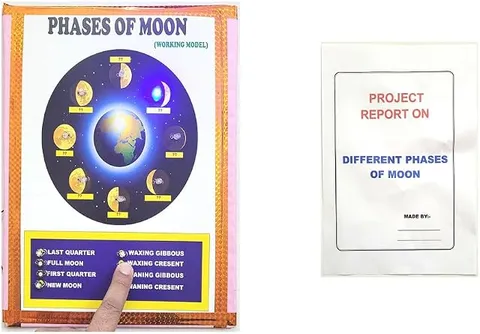
Earth and space. Space models are about positions: where the sun, the earth and the moon sit during a lunar eclipse, why the moon seems to change shape although one half of it is always lit by the sun, or the order of the planets from the sun. A lit board shows the positions; a torch and two balls in your hands show them moving.
Earth and space: positions you can light


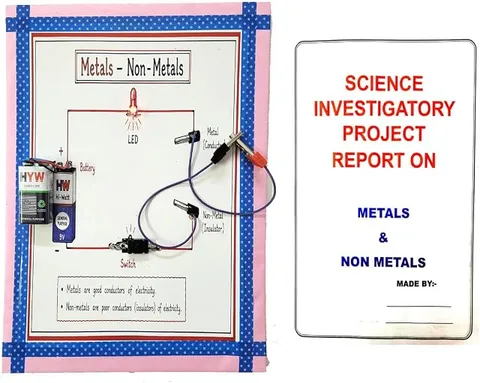
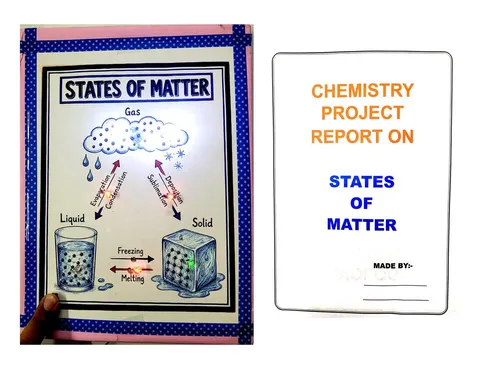
Chemistry. The metals and non-metals tester lights for an iron nail and stays dark for an eraser, and a pencil lead surprises everyone by conducting. The states of matter chart lights each state and the changes between them; a piece of camphor in a closed jar beside it shows one of those changes, a solid turning straight into vapour, really happening. Keep the jar shut, away from any flame and young children, and never taste the camphor.
Chemistry: safe tests and changes to show
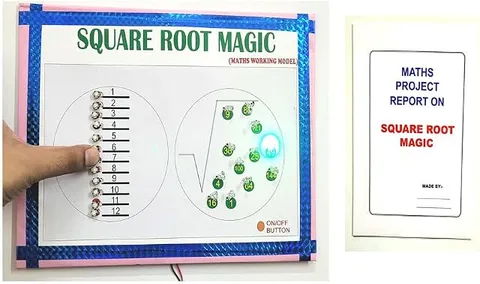
Maths. Maths works when the visitor checks a pattern: subtract the odd numbers 1, 3, 5, 7 and 9 from 25, one after another, and you reach zero in five steps, so the square root of 25 is 5. On the cube root scanner, only a correct pair of probes lights the LED.
Maths: patterns a visitor can check
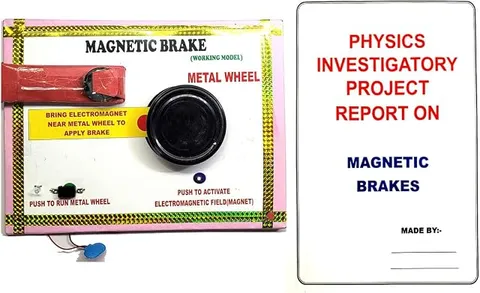
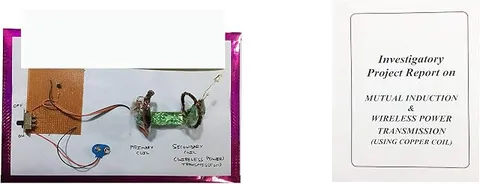
Class 10 to 12. Senior students stand out by taking readings from a model. Hold a multimeter across the Peltier module's leads and watch the voltage fall as the hot water cools. Press the speed breaker slowly and then quickly, with a multimeter across its output, and compare. On the magnetic brake, spin the wheel, switch off the motor and time how long it takes to come to rest, once as it coasts and once with the electromagnet switched on beside it: with the magnet on, it stops sooner. The magnet sets up eddy currents in the wheel, which oppose its motion. Eddy currents are no longer in the class 12 NCERT book, so ask your teacher before using this as a class 12 project, although Lenz's law, which explains them, is still taught. The wireless power board lights an LED with no wire joining its two coils.
Class 10 to 12: models to measure and compare
Heat at the table
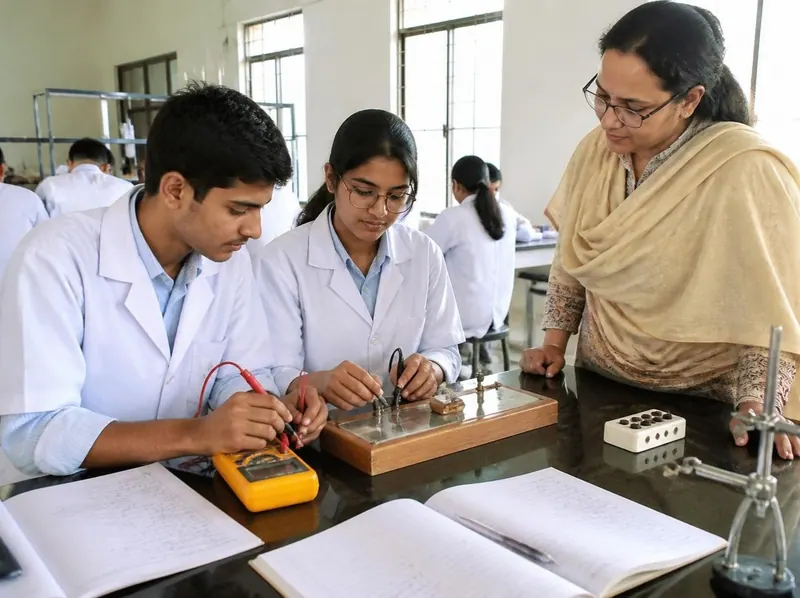
Heat this thermoelectric model with a cup of hot water, not a flame, and keep its other face cool with ice water or a heat sink. Let an adult pour the water, set the cups where nobody can knock them over, and touch the module only once it cools.
For a class 12 project chosen chapter by chapter, see physics project for class 12; to turn any of these models into an investigation with readings and a graph, see class 12 investigatory project physics.
Ready-made, kit or scratch: what fits the time you have?
The right route depends on two things: how much time is left before the exhibition, and how much of the model you want to build yourself.

A ready-made model suits a class display or a school exhibition that allows one; competitions beyond school want your own build, as what each level allows explains.
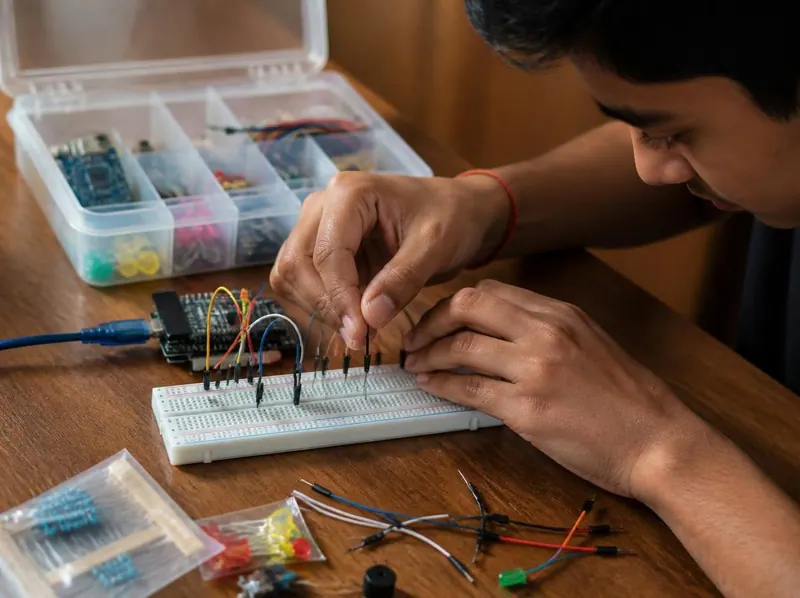
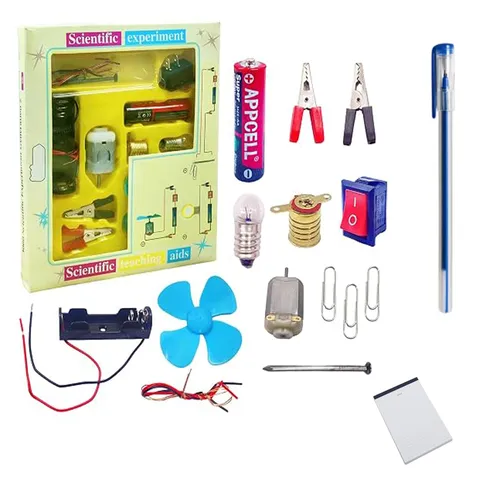
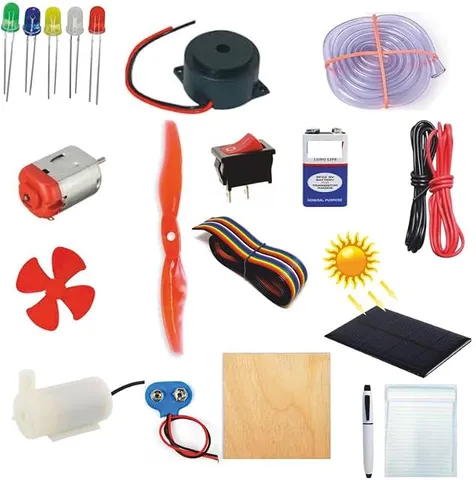
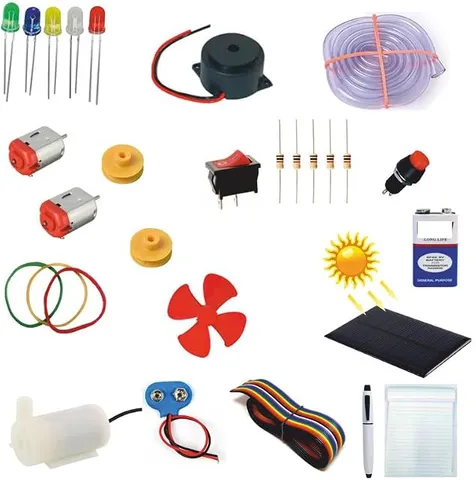
A kit gives you the parts for a set project, or for a set of experiments; a parts pack lets you design your own. Either way, join it loosely first, with crocodile clips or on a breadboard, where a wrong connection takes seconds to move, and fix it to the board only once it works. The illustrated project guides walk through builds such as a mini wind turbine and a hydraulic robotic arm, and more kits are on the DIY kits page.
Kits and parts for building your own model
Building safely
A soldering iron and a glue gun stay hot long after you switch them off: rest them on a stand and keep the cable where nobody trips on it.
Cut away from your body, on a cutting board, with an adult nearby.
A small submersible pump must stay under water whenever it runs; running dry can overheat it.
How do you make a model readable from three steps away?
A model is read before it is explained. The layout decides whether a visitor understands it from a distance or needs you for every word.
A board that reads from three steps away
- A short title that names the principle, not only the object: "Pascal's law in a car brake", not "Hydraulic model"
- The working part in the middle and at the front, where nobody has to lean over to see it
- Labels with arrows to the parts, in large dark letters on light card
- One colour for each thing that flows, such as blue for water and red for current, matched on the chart
- A small "Try me" card beside any button or lever, saying what to press and what to watch
- The chart beside the model, not behind it
- No loose wires: every one taped flat under or behind the board
What else an entry needs beside the model, such as the chart and a short write-up, and how exhibitions run from school level upward, is on project for science exhibition.
How do you make sure your model works on the day?
Most failures at an exhibition are small: a flat battery, a wire shaken loose on the way, a label that fell off. Each one can be prevented the week before.

Reliability checks before the day
- Switch it off and on twenty times in a row, and note any miss
- Carry it in the bag or box you will use on the day, then run it again
- Fit a fresh battery, and pack a second one still in its wrapper
- Press each wire and joint gently; re-fix any that moves
- Mark the switch ON and OFF, and show which way the battery fits
- Syringe models: no air bubbles in the tube, or the push feels soft
- Solar models: test under ordinary room lights, and carry a torch or lamp in case the hall is dim
- Run it as visitors will for as long as a busy session (a push-button magnet in short presses), then feel for any part that has warmed up
- Record a short phone video of it working, to show if it fails on the day
Power at the table
Use a 9 V battery or cells. A model with a mains plug stays with an adult, who plugs it in and switches off at the socket.
Unclip the battery when the table is quiet and at breaks, so it lasts the day and nothing warms up.
Keep spare 9 V batteries in their wrapper: loose in a pocket with coins or keys, the two terminals can short and get hot.
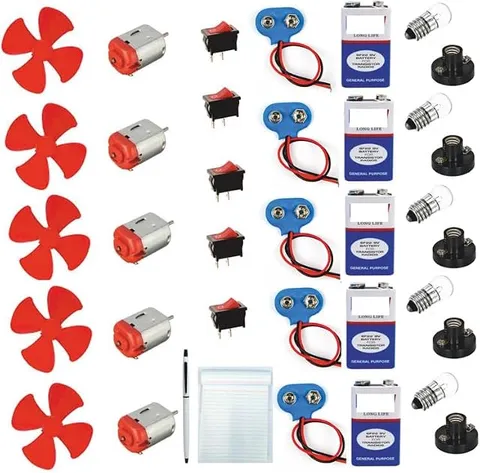
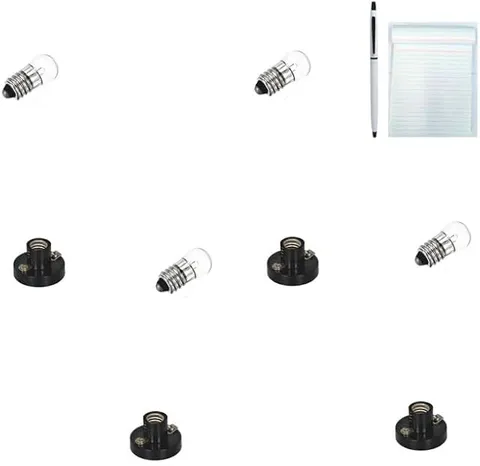
Pack a spare battery, insulating tape, spare wire and a small screwdriver with the model. For a bulb model, a spare bulb of the same voltage as the model's own saves the day when a filament breaks; a 3 V bulb on a 9 V battery burns out and its glass gets very hot. If it stops in front of a judge, keep explaining from the chart while you check the battery and joints, and show the video.
Spares worth packing
How do you explain your model in one minute?
Most visitors stay only briefly, and judges ask their questions after your opening. A fixed order puts the important things first, and the effect does half the explaining for you.
Name the model and its principle
One sentence: "This model shows how a car's brake passes a push through a liquid, which is Pascal's law."
Show the effect first
Press the button, or let the visitor push the syringe, before you explain anything. What they see is your opening line.
Explain what happened
Follow the path of the current, the water, the energy or the blood, pointing to each part as you name it.
Say where it is used
One real example, such as the brakes of a car, a street light that switches itself on, or an alarm on a rooftop tank.
Add what you found or changed
Your own reading, comparison or improvement. This is what makes a common model yours.
Invite a question and stop
End with "Would you like to try it?" or "Any questions?", then let the visitor speak.
| Question | A good answer includes |
|---|---|
| Did you make it yourself? | The honest answer, and the part you built, changed or measured yourself |
| Why did you choose this model? | A question that matters to you, and the lesson it links to |
| What happens if this part is removed? | What the part does, and what visitors would see without it |
| Where is this used in real life? | One example you have seen yourself, not only one from a book |
| What would you improve? | One limitation you noticed, and how you would fix it |
| Is it to scale? | Which sizes or distances are not to scale, and why |
The free ebooks Your Science Exhibition Guide and Viva Questions for Science Projects help you practise a longer explanation and the questions judges ask. For ideas to build into a model of your own, the project idea finder filters a large collection by class and subject.
Questions about science exhibition models
Short answers to what students, parents and teachers ask about projects most often. Tap a question to open its answer.
How can I make my science exhibition model look attractive?
Clarity looks better than decoration. Give it a title that names the principle, put the working part at the front, use large dark labels with arrows and one colour for each thing that flows, and hide every wire. Then check it in a phone photo taken from three steps back.
Is a working model better than a static model for a science exhibition?
Usually, because a part that moves, lights or sounds gives visitors a reason to stop. A static model still suits a structure, such as the layers of the earth; add LEDs that light in order and it holds attention longer.
What is the difference between a working model and an interactive model?
A working model does something when you switch it on, and you explain it. An interactive model is worked by the visitor: they press a quiz button, push a syringe or test a coin, and find the effect for themselves.
Why do science exhibition models stop working on the day?
Mostly for small reasons: a flat battery, a joint shaken loose on the journey, a solar panel under dim lights, or air in a syringe tube. Test it after carrying it, the week before, and pack a spare battery.
What should I do if my model stops working during the exhibition?
Stay calm and keep explaining from the chart while you check the battery, the snap and any joint that moved. Show a short phone video of it working, recorded the week before, and tell the judge honestly what failed and why.
Should my exhibition model run on a battery or on mains power?
On a battery or cells wherever possible: low voltage is far safer, and the model can sit anywhere on the table. A model with a mains plug needs an adult to plug it in and switch it off at the socket.
Can a solar model work indoors at an exhibition?
Often only weakly: indoor lights are much dimmer than sunlight, and a solar cell's output falls with the light on it. Carry a bright torch or a desk lamp to hold close, or choose a model that can switch to a battery.
How do I stop visitors from breaking an interactive model?
Fix every moving part firmly, cover fragile parts so only the buttons or levers can be reached, and put a short instruction card beside it. Keep spares for parts that wear, such as a syringe.
Do judges prefer a complicated science model?
No. A model you understand completely, with one clear principle, does more for you than an elaborate one you cannot explain. Judges ask what each part does, so every extra part is one more question.
Delhi head office
Not sure which model suits your exhibition?
Send the head office in Delhi your class, the subject and the exhibition date on WhatsApp. Ask which listed model fits, or whether a model on your own topic can be made in time.