- Physics
- Ready-made model
- Class 1 to 9
- Printed report included
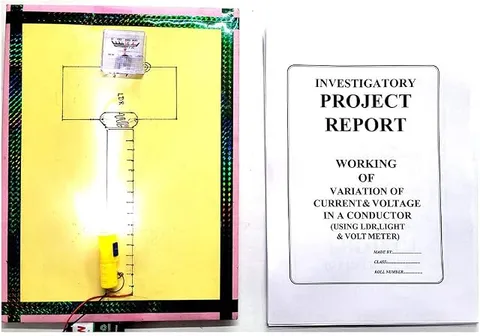
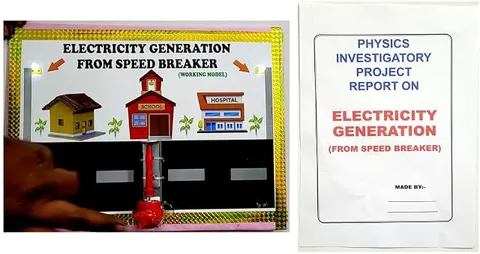
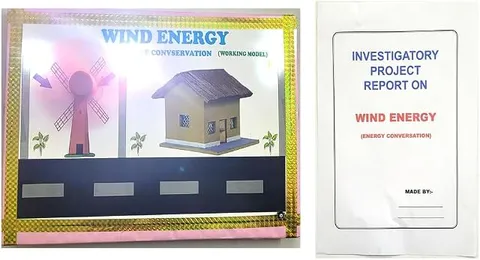
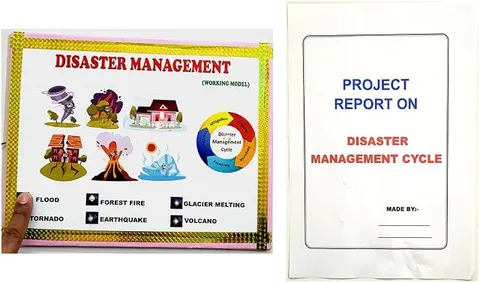
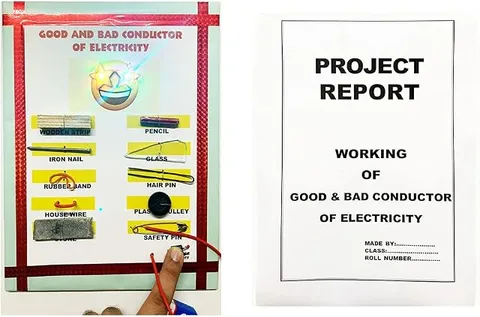
Good & Bad Conductor of Electricity & Electricity Conductor Readymade Science Working Project & Model in Physics with Multicolor Running Lights (with Printed Report)
Code B099QZRD8V
- Paid for and delivered by Amazon. The current price and the delivery date for your PIN code are shown there.
- Sold by Gurukul Technicals Institute, Delhi.
- Need a different topic, a custom version or a school order? Ask on WhatsApp.
In this project guide
Ready-made model
About this model
This readymade physics model is about testing which materials are good conductors of electricity and which are poor conductors, or insulators. The listing says it has multicolour running lights and a printed report, and the topic helps young students learn, by testing, why wires are made of metal and covered with plastic.
How it works
The science behind it
The idea the model demonstrates, in words you can use in your report and when you explain it.
A material that lets electric current pass through it easily is a good conductor, and one that does not is a poor conductor, or insulator. Metals such as copper, aluminium, silver and iron are good conductors because they have many free electrons that drift through the metal when a voltage is applied. Rubber, plastic, glass, dry wood and paper have almost no free charges, so they are insulators. A simple tester is a circuit of a cell and a bulb or LED with a gap in it: when a conductor is placed across the gap, the circuit is complete and the light glows. Graphite, the 'lead' of a pencil, is a non-metal that conducts. Pure water conducts very poorly, but tap water contains dissolved salts and conducts enough to be dangerous. That is why electric wires are covered in PVC, electricians use tools with plastic handles, and we should never touch switches with wet hands.
Make it yourself
Make a conductor tester with running lights yourself
Build your own version from scratch, or use the steps to understand how the ready-made model is put together before you present it.
What you need 9
Step by step 8 steps
- Build the clock
555 pins 8 and 4 to positive, pin 1 to negative, 1 kΩ from positive to pin 7, 47 kΩ from pin 7 to pins 6 and 2 joined together, and the 10 µF capacitor from pin 2 to negative with its long leg to pin 2. Pin 3 is the clock output.
- Build the counter
CD4017 pin 16 to positive, pins 8, 13 and 15 to negative, and pin 14 to the 555's pin 3.
Connect the ten LEDs' long legs to the outputs Q0 to Q9, which are pins 3, 2, 4, 7, 10, 1, 5, 6, 9 and 11 in that order, and join all their short legs to negative through the single 470 Ω resistor; only one LED is on at a time, so one resistor is enough.
Put the two test points in the battery's positive lead, so the circuit gets power only when something is placed across them.
Arrange the LEDs in a ring or wave on the board and touch the test points together: the lights should run one after another.
Test each item by placing it across the test points: if the lights run, it is a good conductor; if they stay dark, it is a poor conductor, or insulator.
Test the liquids by dipping two probes from the test points into each cup without letting them touch, and note whether the lights run, run unevenly or stay dark.
Record every item on the chart and stick a small sample of each under the right heading on the board.
Read this first
Safety first
Go through these points before you build or switch anything on. Younger students should do this with an adult.
- Use only the 9 V battery; never test materials with electricity from a socket or an opened adapter.
- Use the soldering iron only with an adult, and push the ICs into their sockets after soldering so heat cannot damage them.
- Keep water away from the battery and circuit board, and wipe the probes after testing liquids.
- Handle the nail, foil edges and glass carefully, and ask an adult to tape the edges of any glass sample.
Troubleshooting
If something does not work
The usual problems with this model and how to fix them. Open a problem to see the fix.
The lights do not run even when the test points touch
Check that pins 13 and 15 of the 4017 go to negative, and that the 555 is pulsing: an LED with a 1 kΩ resistor on pin 3 should blink. Also check that both ICs sit in their sockets with the notches the right way round.
Several LEDs glow dimly at once
The 4017's reset pin (15) is floating or the clock pulses are not clean. Connect pin 15 firmly to negative and check the 555's wiring.
Pencil lead and salt water make the lights run unevenly
These are weaker conductors than metals, so less current gets through and the voltage reaching the ICs drops. That is a real result: record them as conductors that are not as good as metals.
The lights run too fast or too slow
The speed is set by the 47 kΩ resistor and the 10 µF capacitor. A larger value of either slows the lights down; a smaller value speeds them up.
Exhibition day
How to present it
A running order for the exhibition table or the practical, step by step.
Test everyday objects, such as a coin, a key, an eraser, a pencil lead, a plastic scale and a paper strip, and sort them into two groups on a chart.
Ask visitors to predict each result before you test it, which makes the stall interactive.
Include a pencil lead to surprise people with a non-metal that conducts.
End with safety rules: never touch switches with wet hands and never poke anything into a socket.
Practice
Viva questions
Practice questions on this model, with short answers. Try each one aloud before you open the answer.
Why are metals good conductors of electricity?
Metals have many free electrons that can move easily through them and carry current.
Why do electric wires have a plastic (PVC) covering?
Plastic is an insulator, so it prevents electric shocks and stops bare wires from touching and causing a short circuit.
Is graphite a conductor or an insulator?
Graphite is a conductor, even though it is a non-metal, because it has free electrons.
Why is it dangerous to touch a switch with wet hands?
Ordinary water contains dissolved salts that let current pass, so electricity could flow through the water and your body.
Project file
Project file outline
The headings of the project file, in order. Give each heading its own section and write it in your own words.
The listing includes a printed project report: use this outline to check that your own file covers every part.
Free ebook: Writing a Science Project FileContents
- Aim: to test which materials are good conductors of electricity and which are poor conductors
- Introduction: electric current, conductors and insulators
- Free electrons in metals, and why plastic and rubber are insulators
- Circuit diagram of the tester and the running lights (555 timer and 4017 counter)
- Construction of the board
- Observation table: material, result, conductor or insulator
- Special cases: graphite and salt water
- Uses: why wires are metal inside and plastic outside, and electrical safety at home
- Conclusion and bibliography
Buying checklist
Before you buy
What to check before you order the model, and what to do when it arrives.
1Before you order
- Check that conductors and insulators are in your class syllabus (usually Class 6 to 8 science) and what your teacher wants you to show.
- Check what battery it needs and keep a spare for the day.
- Keep the box for safe transport.
- Check the delivery date for your PIN code on the marketplace, and order well before the exhibition or practical.
- Practise explaining it. Judges ask what the model shows and why; knowing the science matters as much as the model. The viva questions above are a good place to start.
2When it arrives
- The listing says a printed report is included; read it when the model arrives and add your own table of tested materials.
- Test the running lights and the test points on arrival, and collect your own set of materials to test at the exhibition.
Next steps
Take it further
Ways to turn this model into a bigger investigation or a stronger exhibition entry.
Measure the resistance of each conductor with a multimeter and arrange them from best to worst.
Add salt to water a spoon at a time and record how the lights change, as a simple test of how dissolved ions carry current.
Compare thick pencil lines drawn with HB and 6B pencils as conductors, and explain why the softer pencil conducts better.
Audience
Who it suits
Suits Class 6 to 8 science exhibitions and classroom lessons on electricity, circuits and conductors.
- ClassClass 1 to 9
- SubjectPhysics
- TypeReady-made model
- Project reportPrinted report included
Free to read
Free ebooks for this topic
Free PDF ebooks from Gurukul Technicals Institute on the science, the making and the presenting of projects like this one.
- Free PDF ebook
Electricity and Magnetism Experiments
Hands-on experiments with cells, wires, bulbs and magnets
- Free PDF ebook
Physics Working Models Explained
Twenty classic models, how each works and how to make it
- Free PDF ebook
Your Science Exhibition Guide
Choose a project, build it, present it and answer the judges with confidence
- Free PDF ebook
Writing a Science Project File
How to write the report, from the cover page to the bibliography