- Biology
- Ready-made model
- Class 1 to 9
- Printed report included
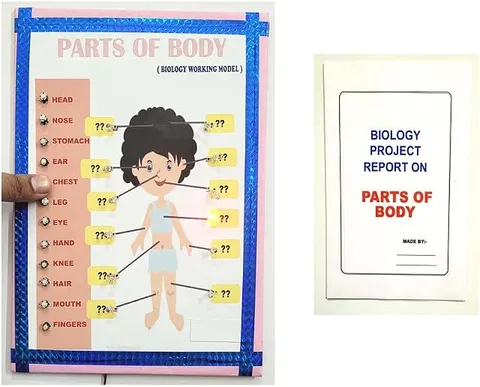
Parts of The Human Body Educational Biology Activity Working Project Model with Printed Report
Code B0DK22B1FD
- Paid for and delivered by Amazon. The current price and the delivery date for your PIN code are shown there.
- Sold by Gurukul Technicals Institute, Delhi.
- Need a different topic, a custom version or a school order? Ask on WhatsApp.
In this project guide
Ready-made model
About this model
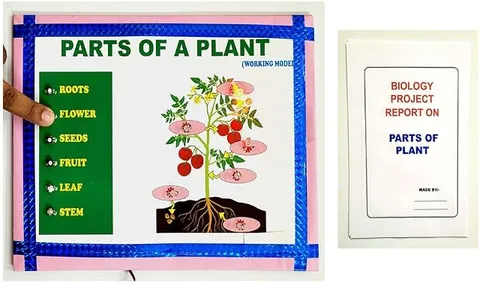
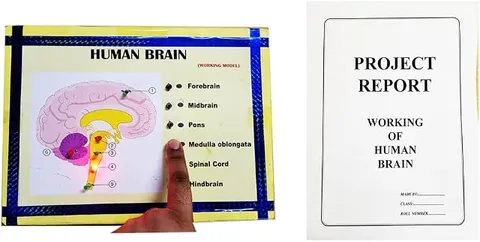
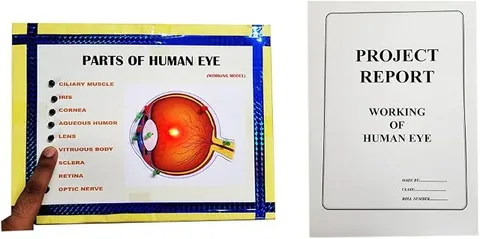
This biology activity model is about the parts of the human body, from outer parts like the head, trunk and limbs to the main organs inside. The listing says a printed report is included as well.
How it works
The science behind it
The idea the model demonstrates, in words you can use in your report and when you explain it.
The human body is organised in levels: cells form tissues, tissues form organs, organs work together in organ systems, and all the systems together make up the organism. The main organ systems are the skeletal, muscular, digestive, respiratory, circulatory, nervous, excretory and reproductive systems. An adult skeleton has 206 bones, which support the body, protect organs like the brain and heart, and help in movement along with the muscles. The brain controls the body, the heart pumps blood, the lungs exchange oxygen and carbon dioxide, the stomach and intestines digest food, and the kidneys filter waste from the blood. The skin is the largest organ, and the liver is the largest internal organ and the largest gland. No system works alone: when you run during a games period, your breathing and heartbeat both speed up to deliver more oxygen to your working muscles.
Make it yourself
Make a parts of the human body model yourself
Build your own version from scratch, or use the steps to understand how the ready-made model is put together before you present it.
What you need 8
Step by step 7 steps
Draw or trace the body outline on chart paper and glue it to the board.
Label the external parts around the outline: head, neck, trunk, arms, hands, legs and feet.
Copy the size and position of each organ from your textbook diagram: brain, lungs, heart, liver, stomach, intestines and kidneys.
Cut each organ from coloured foam or felt, and stick a velcro dot behind it and at its place on the body.
Fit the red LED behind the heart and wire it to the blinking circuit and battery so it flashes about once a second.
Make a card for each organ naming its organ system and its main job.
Use the removable organs as a quiz, asking visitors to put each one back in its right place.
Read this first
Safety first
Go through these points before you build or switch anything on. Younger students should do this with an adult.
- Ask an adult to help with the cutter and any glue gun.
- Keep velcro dots and small parts away from young children.
- Switch off the battery after the display.
Troubleshooting
If something does not work
The usual problems with this model and how to fix them. Open a problem to see the fix.
The organs look the wrong size or are in the wrong place
Trace them from a textbook diagram enlarged to the same scale as your outline.
The velcro keeps coming off the board
Add a drop of glue under each self-adhesive dot.
The heart LED blinks too fast
Use a larger timing capacitor or resistor in the 555 circuit.
The board looks crowded with labels
Use numbered pointers and a key at the side.
Exhibition day
How to present it
A running order for the exhibition table or the practical, step by step.
Point to each organ on the model and give its function in one short sentence.
Group the organs by system, so the judges see how organs work together and not just where they are.
Ask a visitor to feel their own pulse at the wrist to show the circulatory system at work.
Add one health tip for each system, such as eating fibre for digestion or exercising for the heart and lungs.
Practice
Viva questions
Practice questions on this model, with short answers. Try each one aloud before you open the answer.
What is the largest organ of the human body?
The skin is the largest organ; the liver is the largest internal organ.
How many bones are there in an adult human body?
An adult human skeleton has 206 bones.
What is the function of the kidneys?
The kidneys filter the blood, removing urea, extra salts and water, which leave the body as urine.
What are the levels of organisation in the human body?
Cells form tissues, tissues form organs, organs form organ systems, and organ systems together form the organism.
Project file
Project file outline
The headings of the project file, in order. Give each heading its own section and write it in your own words.
The listing includes a printed project report: use this outline to check that your own file covers every part.
Free ebook: Writing a Science Project FileContents
- Aim: to show the external parts and main internal organs of the human body and their functions
- Materials
- Levels of organisation: cells, tissues, organs and organ systems
- External parts of the body
- Internal organs and the organ systems they belong to
- Construction of the model
- Keeping the body healthy: diet, exercise and hygiene
- Conclusion
Buying checklist
Before you buy
What to check before you order the model.
1Check these first
- This topic suits primary and middle-school classes; check how many organs and systems your teacher wants shown.
- Check in the listing whether any part lights up and whether batteries are needed.
- If a printed report comes with it, add your own drawings and a few facts in your own words.
- Check the model a few days before submission and reattach anything loose.
- Keep the box so the board does not bend.
- Check the delivery date for your PIN code on the marketplace, and order well before the exhibition or practical.
- Practise explaining it. Judges ask what the model shows and why; knowing the science matters as much as the model. The viva questions above are a good place to start.
Next steps
Take it further
Ways to turn this model into a bigger investigation or a stronger exhibition entry.
Add a working lung model made from a bottle and balloons to show breathing.
Measure your pulse at rest and after exercise and show the results on a chart.
Cut a string to the length of the digestive tract given in your textbook and display it coiled to show how long it is.
Audience
Who it suits
Suits Class 3 to 7 science and EVS projects and classroom lessons on the human body.
- ClassClass 1 to 9
- SubjectBiology
- TypeReady-made model
- Project reportPrinted report included
Free to read
Free ebooks for this topic
Free PDF ebooks from Gurukul Technicals Institute on the science, the making and the presenting of projects like this one.
- Free PDF ebook
Biology Models Guide
Make the heart, lungs, kidney, eye, cell and more, and explain them well
- Free PDF ebook
Your Science Exhibition Guide
Choose a project, build it, present it and answer the judges with confidence
- Free PDF ebook
Writing a Science Project File
How to write the report, from the cover page to the bibliography
- Free PDF ebook
Viva Questions for Science Projects
How to answer examiner questions, with sample questions for popular projects